
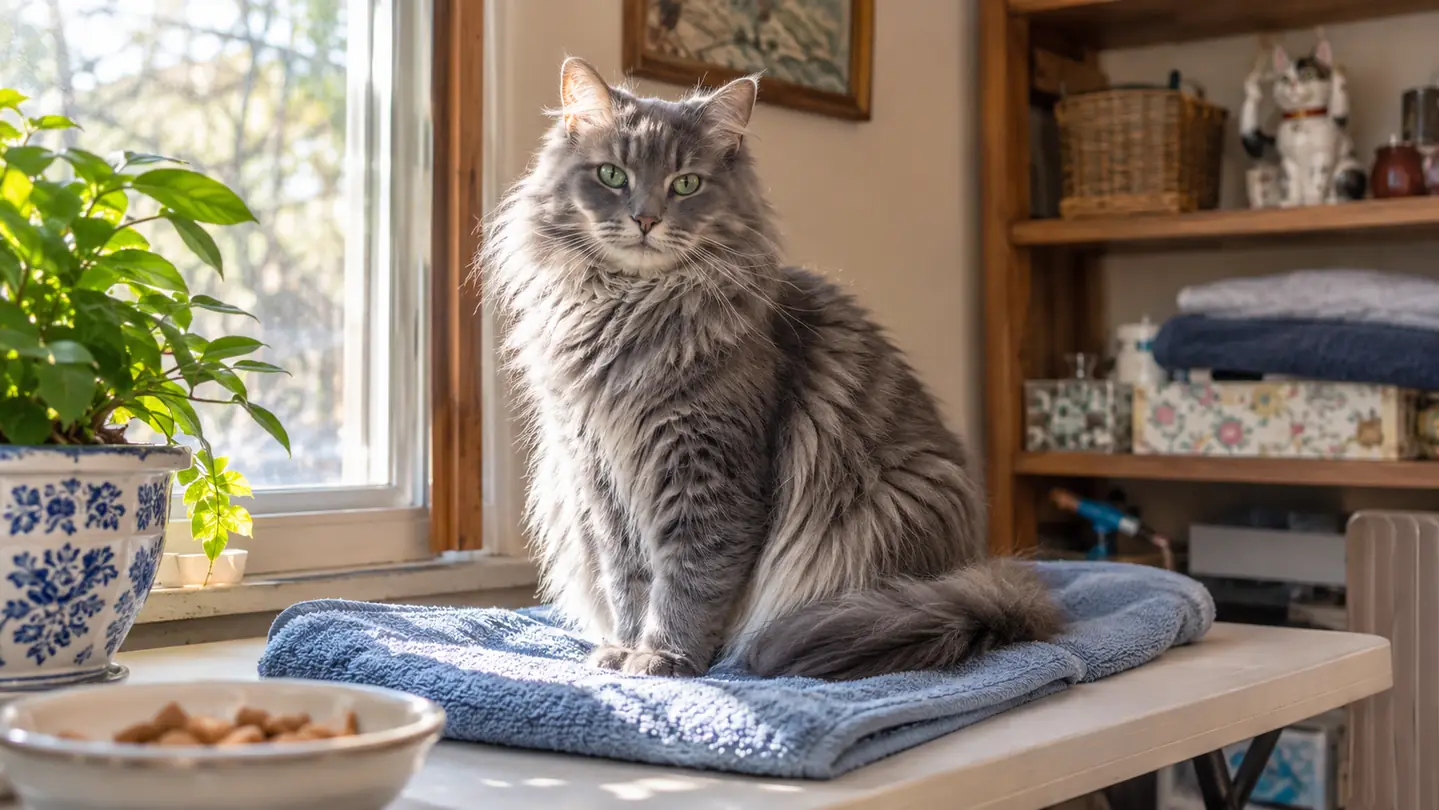
Pip is four years old, nine pounds, orange, and convinced that nail trims are a personal insult. He will sit through a dental wipe. He will let me run a grooming glove down his back without a twitch. The second I pick up a clipper he turns to liquid and slides off the towel onto the floor. Juniper is seven, a long-haired Maine Coon mix, and she sits like a patient at a very good salon while I do all eighteen nails in under three minutes.
If you live with one of each, you already know the clipper matters very little for the easy cat and quite a lot for the difficult one. I have used the Pet Republique stainless steel clippers on both cats for about six months now, every two to three weeks. This spring a friend left a pair of gonicc clippers at my house for a few weeks, and I ran them through the same routine, on the same two cats, on the same towel, at the same window.
Short answer: Pet Republique wins on grip and control, and control is what gets a squirmy cat finished. The gonicc pair asks less of your hand on every single squeeze. If your hands ache, that second point may outrank everything else on this page, and I am not going to pretend otherwise.
| Pet Republique | gonicc | |
|---|---|---|
| Grip and stability | Wider, softer grip that fills the hand | Slimmer handle with less padding |
| Squeeze effort | Firmer action, more hand strength per nail | Lighter squeeze, easier on tired hands |
| Control on a pulling cat | Stays lined up when the paw jerks back | So light that the paw moved more for me |
| Blade edge | Concave, curves around the nail | Curved as well, different feel in the cut |
| Small pet sizing | Built for kittens, cats, rabbits, guinea pigs and other small animals | Fine on adult cats, and I would still pick the smaller pair for a kitten |
| Learning curve | Took me two sessions to stop thinking about it | Comfortable from the first nail |
One note before I walk through it. I am not going to tell you that either pair will make your cat enjoy this. Neither one did. What changed between them was how much of the job I could finish before Pip decided he was done.
How I Tested Two Pairs on Two Very Different Cats
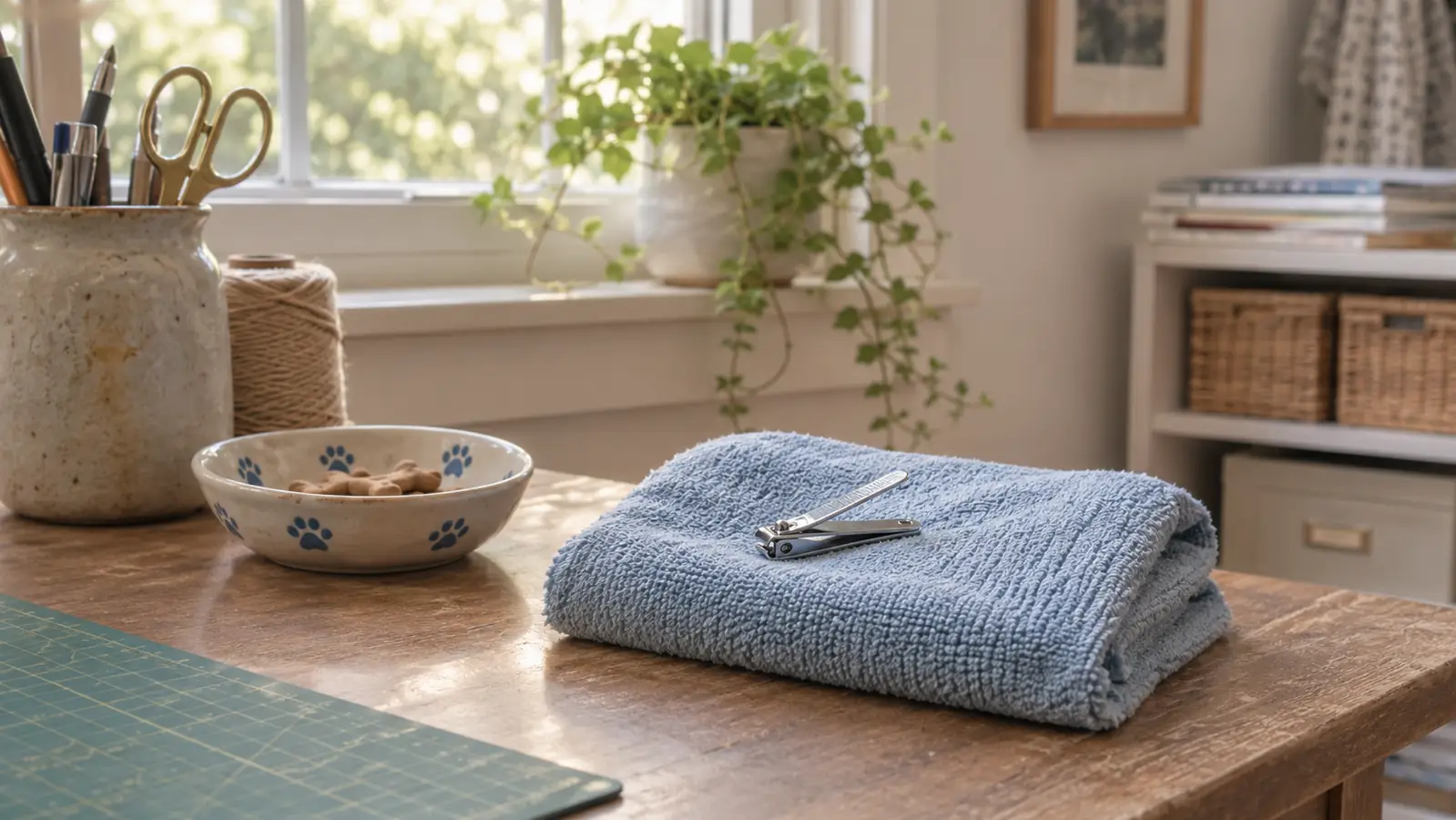
My setup is a folding craft table in the spare room with a bath towel folded twice on top, next to a window, with a small dish of treats at my elbow. Both cats get their nails done every two to three weeks. When I try a new tool I do not change anything else, because if I also change the towel or the time of day then I have no idea what made the difference.
With Pip I work in short sets. Two or three nails, one treat, let him go, then finish the rest later the same evening. Juniper gets all four paws in one sitting because she lets me. I have never cut the quick on either cat and I intend to keep that record going.
The first thing I tried, long before either of these clippers, was doing Pip's nails on the living room floor while he was half asleep. That worked exactly once. He woke up on the third nail, and after that he associated the floor with the clipper and would not settle there at all. The craft table works better because it is a surface he gets lifted onto and lifted off, so he knows the session has a beginning and an end. That one change did more for us than any tool.
What I watch for is boring and specific. Does the paw stay where I put it. Can I see the line where the blade meets the nail. Does the nail come off clean or does it crush and splinter at the tip. Does the clipper rotate in my hand when the cat pulls back. How does my thumb feel after ten nails. Does anything loosen up after a month of living in a drawer with a brush and a comb.
A friend left the gonicc pair with me in March. I used it on Pip for two sessions and on Juniper for one, then went straight back to the Pet Republique pair so I could compare from the tool in my hand rather than from memory.
The Blade Edge, and Why It Matters on a Cat
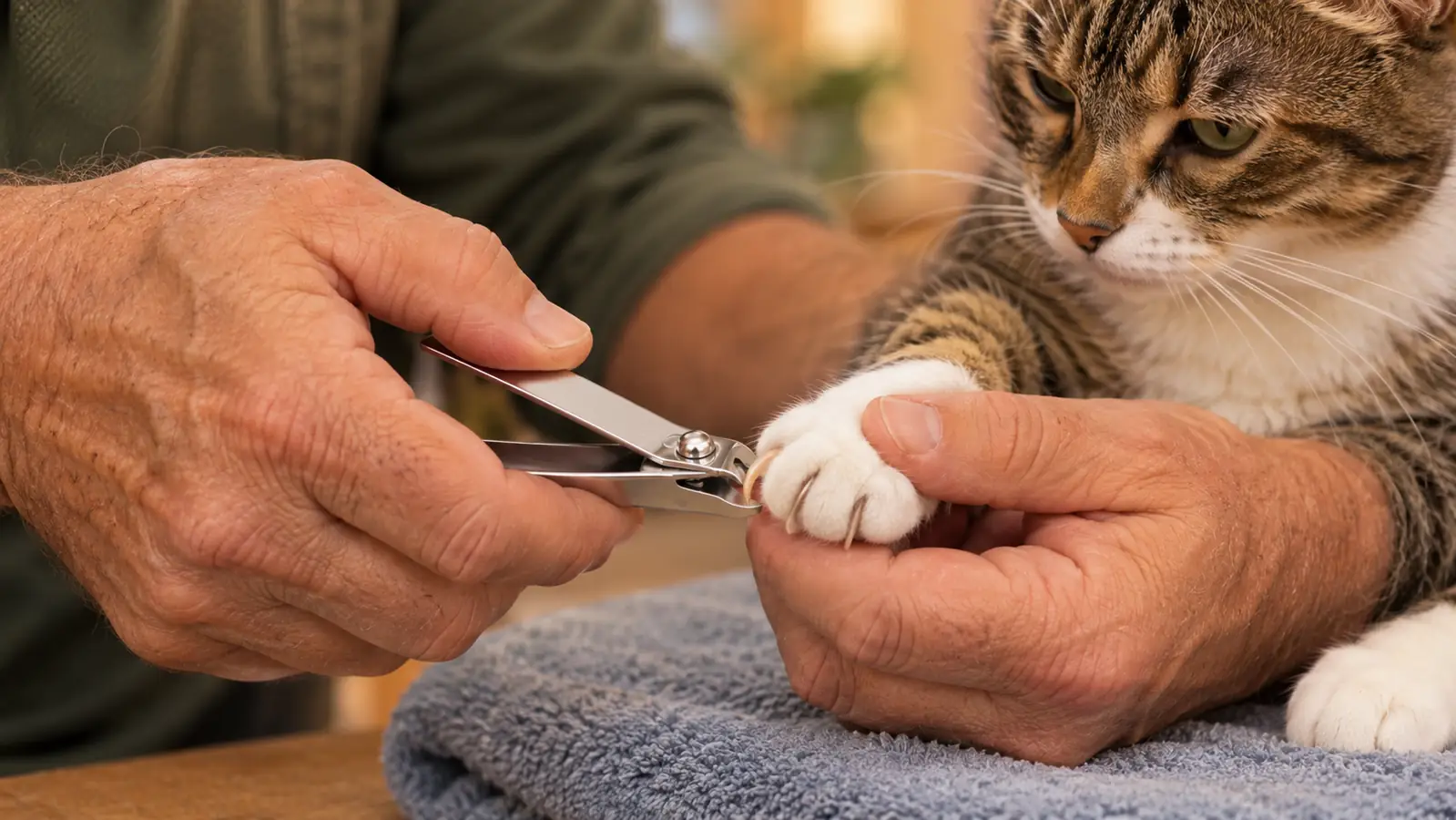
Cat nails are small, thin at the tip, and curved. A flat blade meets that curve at a point and has to be forced through, which is how you get a nail that crushes instead of cutting clean. A concave edge curves around the nail the way a good pair of cuticle nippers curves around a cuticle, so the cut happens in one motion and the tip stays intact.
The Pet Republique blade is concave and short, which helps me see what I am doing. I line the edge up with the nail, look from the side rather than from above, and take one thin slice. Short squeezes, not slow ones. A slow squeeze is what makes a nail splinter, because the blade hesitates halfway through the cut.
After six months of trims every couple of weeks on two cats, the edge still cuts rather than presses. That is not a forever thing with any clipper. Stainless steel holds up better than the coated blades on cheap pairs, and this one has no loose parts or wobble at the pivot, which is what usually goes first. When a nail starts needing two squeezes to get through, that is the signal to replace the tool, not to squeeze harder.
I wipe the blades with a dry cloth after each session and keep the pair in the top drawer of the craft table rather than in the bathroom, because a bathroom drawer is where metal goes to rust. Six months in, there is no wobble and no loose parts, and I have not had to think about the blade once during a trim, which is exactly what I want from a tool this small.
Where Pet Republique Wins
The grip is the whole argument. The Pet Republique clipper has a wider, softer handle than the gonicc, and that padding is doing real work when a nine pound cat decides to leave. My thumb and middle finger have somewhere to sit, so the tool stays lined up with the nail instead of twisting away. On Pip that has meant finishing four nails in a set instead of two. Same cat, same towel, same treats, same evening.
The concave blade is the second reason. On a nail that is barely a quarter inch wide, a curved edge cups the nail and cuts in one motion, and I do not have to reposition halfway. Between the grip and the edge I am making fewer decisions per nail, and fewer decisions is what keeps a nervous cat on the towel. The stainless steel has held up through six months of use with no rust spots and nothing working its way loose.
There was one evening in June that settled it for me. Pip had grown a slight hook on one front nail that was catching in the couch fabric, so that nail had to come off first whether he liked it or not. I got him on the towel, took that nail in one squeeze, and he was gone before the second. A few weeks earlier, with the gonicc pair in my hand, that same hooked nail took me three tries across two sittings, because every time the paw shifted the cut shifted with it. The tool did not fail. I just could not hold it steady on a moving paw.
It is also genuinely small. Just 4.72 inches long and 0.71 ounces, so it does not drag a paw downward while I am lining up a cut. And it is designed for kittens, cats, rabbits, guinea pigs and other small animals, which matters in a house where one tool needs to cover every job. If a friend brings a rabbit over, I am not buying a second clipper.
Two nails, one treat, then the rest later the same evening. That is not a failure. That is the method.
Where gonicc Wins
The squeeze is lighter. That is the honest advantage, and for some people it is the only one that matters. The gonicc asks less of your hand on every nail, so ten nails in a row does not leave my thumb buzzing the way it does after a long set with a firmer clipper. If you have arthritis, a weak grip, or hands that cramp after a few minutes, that lighter action is worth more than any amount of padding.
It also felt familiar immediately. There was no adjustment period, no session where I was still learning the tool. If you trim a calm cat who holds still, you will probably never notice the grip difference, because the grip only becomes a factor when the cat pulls. And the gonicc pair is the one most people find first, which means there are a lot of cat owners out there who already know exactly how to hold it. That is not nothing.
Six months in, this is the pair that finishes Pip's nails
Wider, softer grip, a concave stainless blade, and just under an ounce in the hand. The Pet Republique clippers have done both cats every two to three weeks for six months, and I have not cut a quick yet.
Amazon Check Today's Price on Amazon →What Neither Clipper Fixes
No clipper makes a cat enjoy a manicure. If a product page tells you otherwise, close the tab. Juniper tolerates the whole thing because she is Juniper. Pip tolerates two nails because he is Pip, and the tool I use changes how fast we get to two, not whether we get there at all.
The quick is the pink line running inside the nail, and both of these blades cut exactly where you put them. If you cannot see the line, stop and look again. The Pet Republique instructions suggest a drop of baby oil on the nail to make the quick easier to see, and that genuinely works on dark nails. So does trimming after a meal when the cat is sleepy, and so does taking the very tip off instead of a big slice.
What helps more than either clipper is separating nail day from brush day. Juniper gets brushed most evenings for a few minutes on her back, sides and hindquarters. She gets her nails every other week or so. When I did both in one sitting she started objecting to the brush, which is a much worse problem than a cat who objects to clippers.
I also keep that folded towel between the cat and the table, and not just for comfort. A towel that has been through the wash a few times has enough texture that a cat cannot slide on it, and a cat who cannot slide stops trying to. For the first month I was doing this on the bare table, and Pip went straight off the edge twice in one week. That was my setup, not the clipper.
And a mat behind an ear is not a nail problem. I work those loose with my fingers first and brush afterward, and the clippers stay out of it. Using a nail tool on anything other than a nail is how you end up with a cat who will not come near the craft table.
One more thing that has nothing to do with either brand. If you have a second person available, have them hold the cat against their chest with one arm under the belly while you take the paw. Both pairs got easier to use that way, and Pip got through all eighteen nails in one sitting for the first time this year.
Who Should Buy Which
Buy the Pet Republique clippers if you trim alone, if one of your cats pulls a paw back, or if you want a single pair that handles a cat, a kitten and the occasional small pet in the same house. The wider, softer grip is the reason, and the concave blade is a close second. Six months of use has not loosened anything, and the size means it lives in the top drawer of my craft table without taking up room.
Buy the gonicc clippers if your hands are the limiting factor. If your cat sits still and your thumb cramps halfway through the second paw, the lighter squeeze will do more for you than padding ever will. If you already own a pair and it works, there is no reason to replace it. A clipper you trust beats a clipper a stranger on the internet prefers, including me.
The one thing I would not do is buy both. Two pairs means two sets of habits, two things rolling around in the drawer, and one more decision to make while a cat is already losing patience on the towel.
The pair I reach for when Pip is already halfway off the towel
Concave stainless blade, wider softer grip, 0.71 ounces. Six months, two cats, trims every two to three weeks, no loose parts and no cut quick.
Amazon See It on Amazon →