
Pip can hear the drawer open from the other side of the house. He is four years old, nine pounds, a short-haired orange tabby, and he has strong opinions about his feet. For two years, nail day went the same way. I would get him on my lap, get one paw into my hand, and he would turn into a bag of elbows. I tried the towel wrap. I tried one nail a night for a week. I tried letting the vet handle it and calling that a routine.
What finally changed was not my technique, and it was not Pip. It was the clipper. About six months ago I switched to the Pet Republique stainless steel cat nail clippers, the small pair with the concave blade, and nail day stopped being a fight I lost every time. It is still not his favorite twenty minutes of the month. But I finish the trim now. Finishing is the entire point.
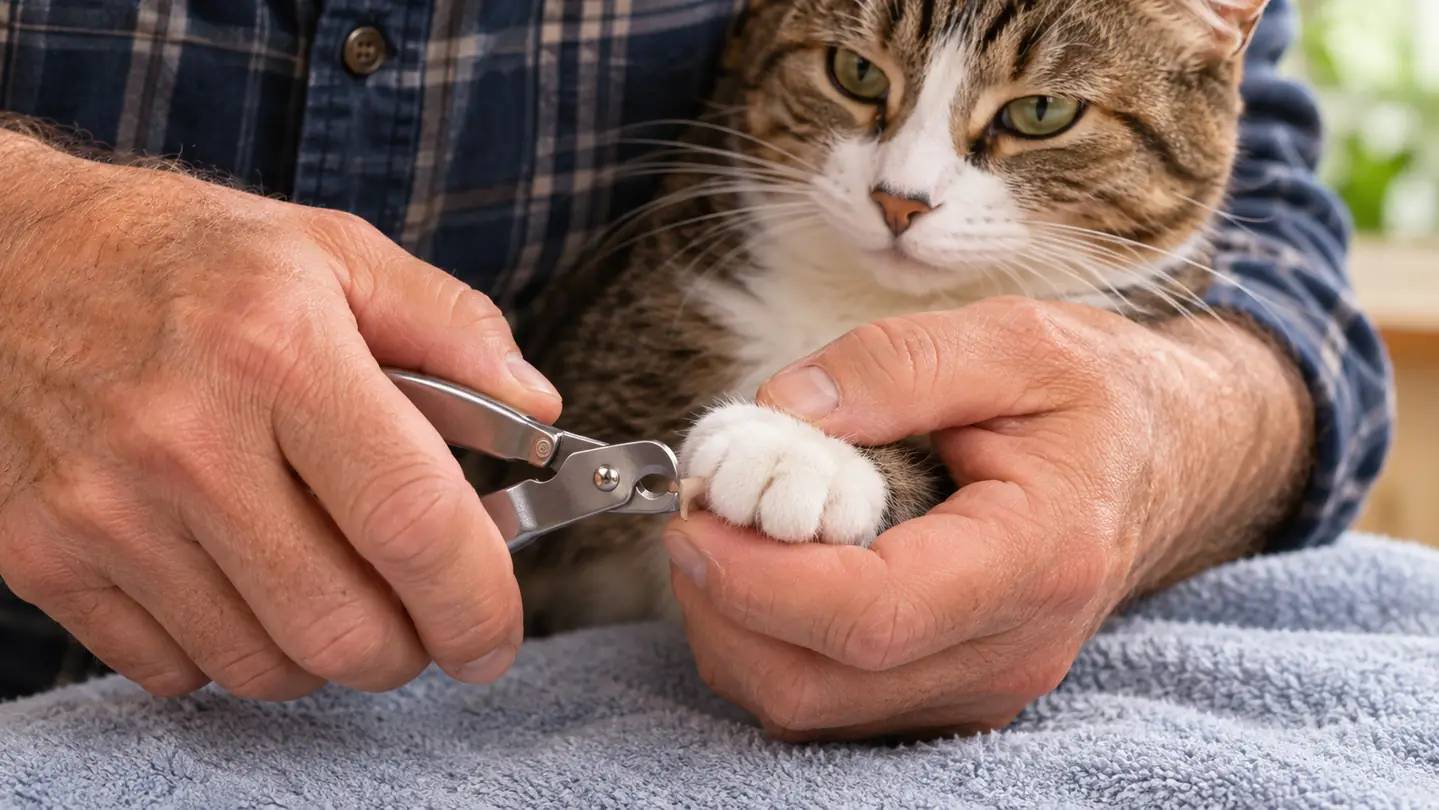
The concave edge is the part that matters for me. The blade curves around the nail instead of cutting across it flat, so the nail settles into the groove and I can see where the cut is going to land before I squeeze. My old flat pair had me angling and guessing. This one is open, position, squeeze, done. The grip is larger and softer than the drugstore clipper I used for years, and my hand does not cramp by the fourth paw.
Size is the other half of it. The clipper is 4.72 inches long and weighs under an ounce, which reads like a specification and is really the reason it works. It fits in the same hand that is already holding a nine-pound cat. I am not wrestling a tool and a tabby at the same time, and that alone cut my trim time down to something Pip can tolerate.
I have never cut the quick. Six months, two cats, every two to three weeks. I will not pretend that is skill on my part. It is a small blade, a slow hand, and the tip that comes with the clipper: a dot of baby oil on the nail makes the quick show up pink and easy to see before you commit to the cut. If you take one thing from this, take that one.
Two or three nails, one treat, and the rest after dinner. The trim gets finished either way, and neither of us ends the night under the bed.
The pair that ended the towel burrito
Small concave blade, stainless steel, a grip that does not cramp your hand by the fourth paw. This is the clipper I have used on both cats for six months, and the one I hand to friends who ask how I finally finished a trim. Today's price is on the listing, and the baby oil tip is printed on the card in the box.
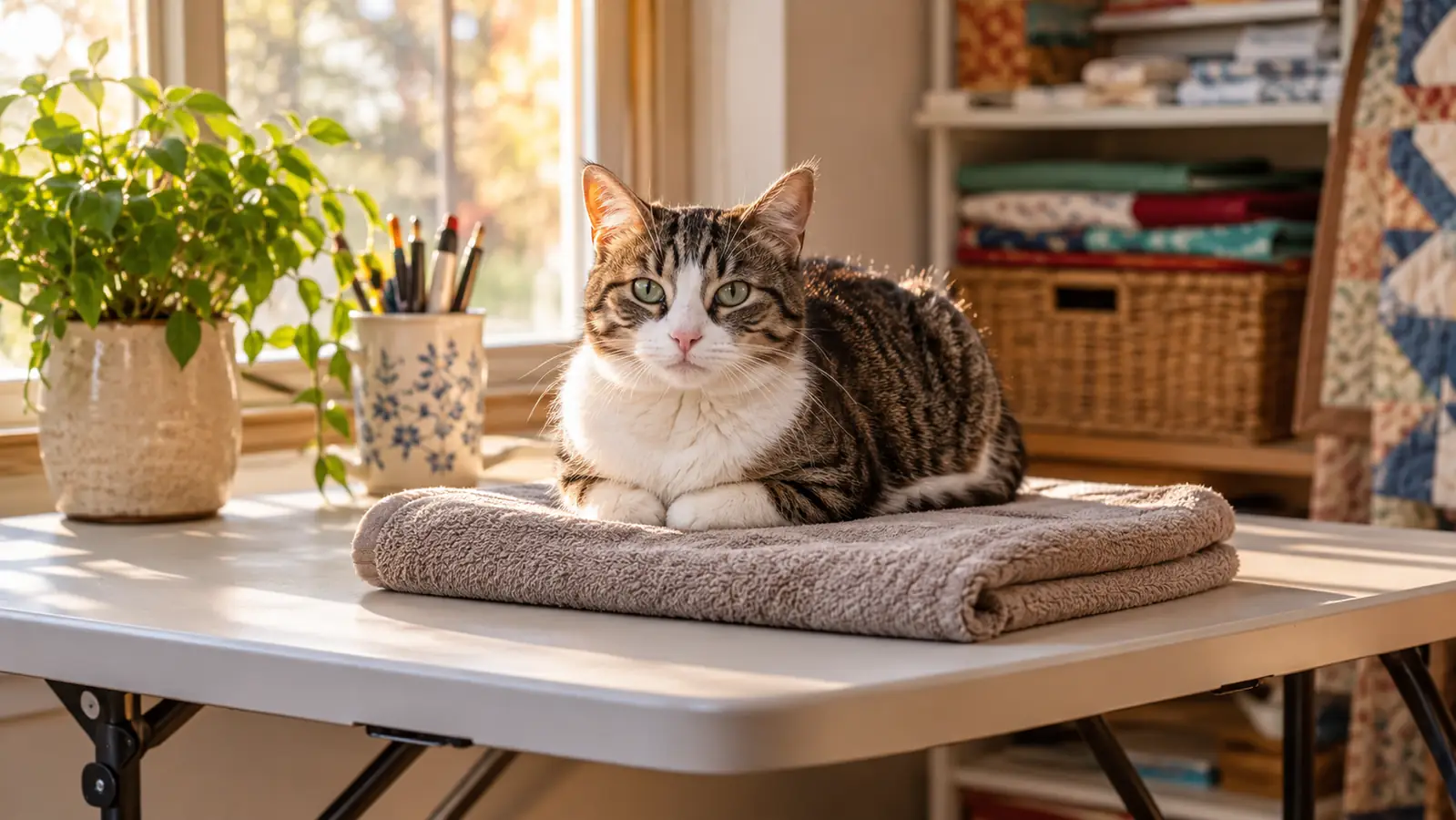
Amazon Check Today's Price on Amazon →Here is what nail day looks like now. The folding craft table in the spare room, a towel on top, late afternoon light coming through the window. I sit sideways rather than facing Pip, because facing him feels like a stare-down and he escalates. His front paws are first. I take the left paw in my left hand, press the pad gently with my thumb so the claws extend, and clip the clear hook off the end of each nail. Then the right. Then a break.
Juniper is easy and always has been. She is seven, a long-haired Maine Coon mix, about fourteen pounds, and she sits through all four paws like she is being paid for it. The same clipper handles her thicker nails without any extra effort, which was not true of the tiny pair I used to keep in the kitchen drawer.
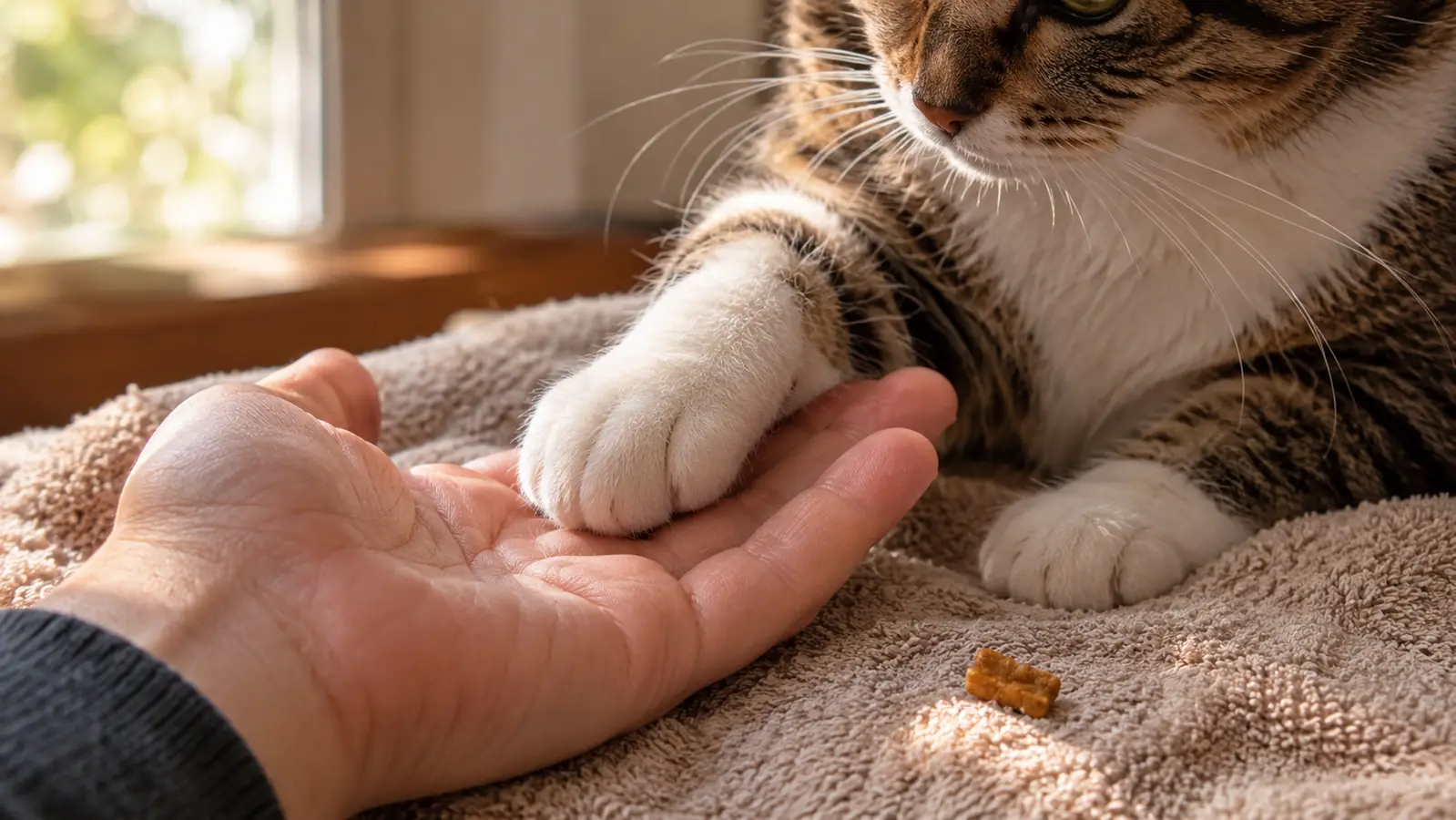
Pip is where the two-nail rule comes in. I do two or three nails, give him a treat, and put him down. He walks off, shakes a paw, comes back for the second treat, and we do a few more. Some evenings we finish in one sitting. Some evenings we finish after dinner. The clippers live in the top drawer of the craft table next to the brush, so setting up again takes ten seconds instead of a search.
What this does not do: it does not make Pip enjoy nail trims, and it will not fix a cat who genuinely needs sedation at the vet. It is a small, sharp, well-made tool that makes a fast, accurate cut possible. The calm part is still on you, and on picking a moment when the cat is sleepy rather than wound up.
The other thing I noticed after a few months is that the cuts are cleaner. Cat nails splinter and snag on furniture when they are clipped with a dull blade, and a snagged nail catches on the carpet and pulls. Since switching, I have not had a single jagged edge to file down, and I have not had a nail split up past the quick. For a cat who fights the process, fewer repeat visits to the same paw matters.
What I'd Tell You If We Were Sitting at My Kitchen Table
I would tell you to stop trying to do all four paws in one go. I wasted two years on that. Do a couple of nails, put the cat down, and pick it up again later. The trim still gets done, and the cat stops associating the clipper with being trapped.
I would tell you to buy a small pair with a concave blade and a grip that fits your hand, and to keep it in the same drawer as your brush so finding it is not a production. Pet Republique is the pair I landed on after trying three others, and six months in I have no reason to look again. It is stainless steel, it has survived being knocked off the craft table twice, and the blade still cuts clean.
And I would tell you to keep the vet in the loop anyway. I trim nails every two to three weeks because that is what works for two indoor cats, but the yearly checkup is where teeth and weight and everything else gets looked at. Nail clippers solve one small problem well. They are not a substitute for the rest of the care.
Six months in, still the pair in the drawer
If your cat turns into a bag of elbows the moment the clipper comes out, this is the one I would start with. Pet Republique keeps it simple: concave blade, stainless steel, small enough to hold with a nine-pound tabby in the same hand. Two cats, six months, no cut quicks.
Amazon See the clippers on Amazon →