
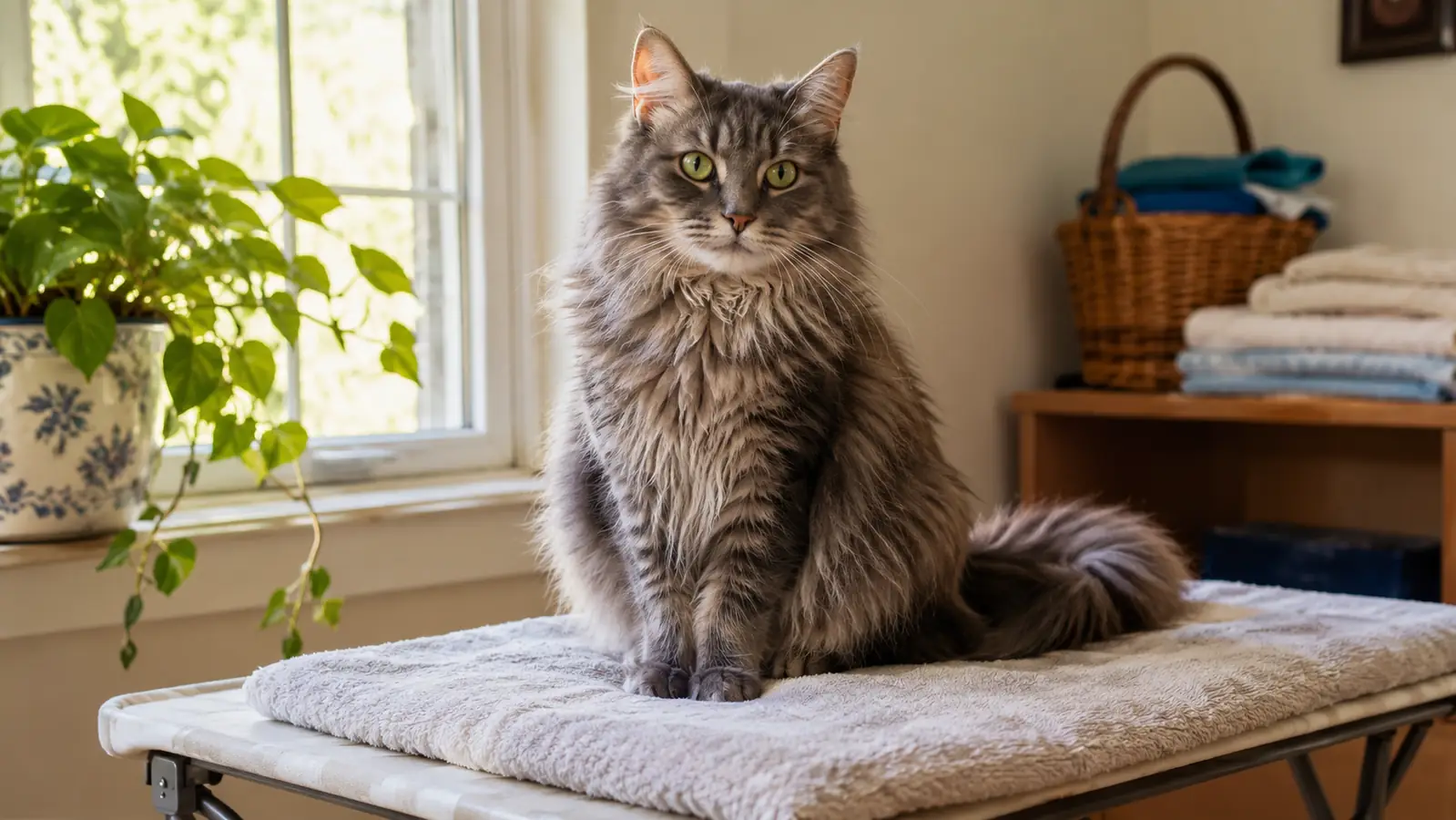
Nobody warns you that the clipper is the easy part. Six months ago I bought the Pet Republique cat nail clippers because Pip, my four-year-old orange tabby, had turned nail trims into a two-person wrestling match, and I assumed the tool was the problem. It was not. The tool is the calmest thing about the entire procedure. What nobody tells you is that a good clipper buys you accuracy, not cooperation, and the gap between those two things is where most of this review lives. I have trimmed both my cats with these every two to three weeks since, somewhere around a dozen sessions, and my honest opinion does not line up neatly with the wall of five-star reviews on the listing.
The short version, before the long one. These are small scissors-style clippers, stainless steel, with a concave cutting edge, and they cut cleanly and predictably. They will not make a cat hold still. They will not save you from cutting the quick if you rush a nail you cannot see. Pet Republique does not sell them as a beginner safety tool, and I am glad about that, because clippers marketed that way tend to make promises on the cat's behalf that the cat has not agreed to. What you get is a properly sharp edge in a small frame, and that turns out to matter more than I expected when I bought them.
The Quick Verdict
Sharp, small and predictable in the hand. Buy them for the concave blade and plan to supply the patience yourself.
Amazon Check Today's Price →The one tool in my grooming drawer I have never once wanted to replace
Six months of nails on two cats, and the edge still slices instead of pinching. If the blade is what you came for, these are the ones.
Amazon Check Today's Price on Amazon →What Nobody Tells You About Cat Nail Clippers
Cat nails are not small dog nails, and a tool only works if it respects that. A cat nail is thin and curved, and it curves down and away from you at exactly the angle that hides the quick. A scissors-style clipper with a concave edge is the right shape for that job, because the curve of the blade wraps the nail rather than flattening it on both sides. When I was still using the old human-style clippers that were already in the house, I was essentially guessing. The blade covered the whole nail and I could not see where the quick ended until after I had cut.
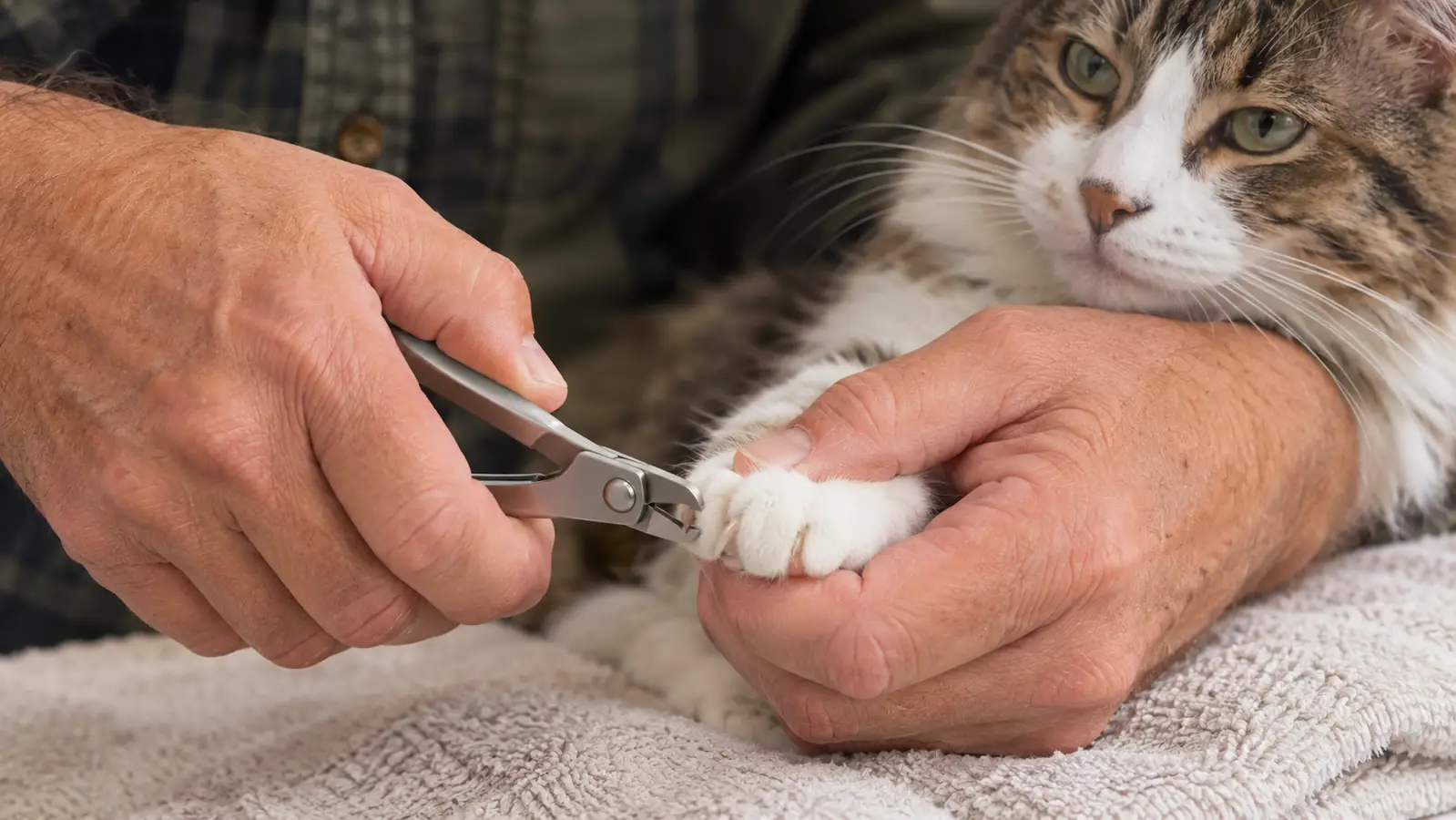
The second thing nobody says out loud is that most cats are not fighting the clipper. They are fighting the hold. Pip will sit in my lap for twenty minutes if I am brushing him, and the moment my left hand closes around his paw in a certain way he is gone, under the chair, done for the evening. The clippers were never the trigger. Once I stopped bracing his whole leg and started just holding the paw loose and low, the nails started getting done. I want that in the record because it took me two clippers and about four months to understand it, and I would like to save you the four months.
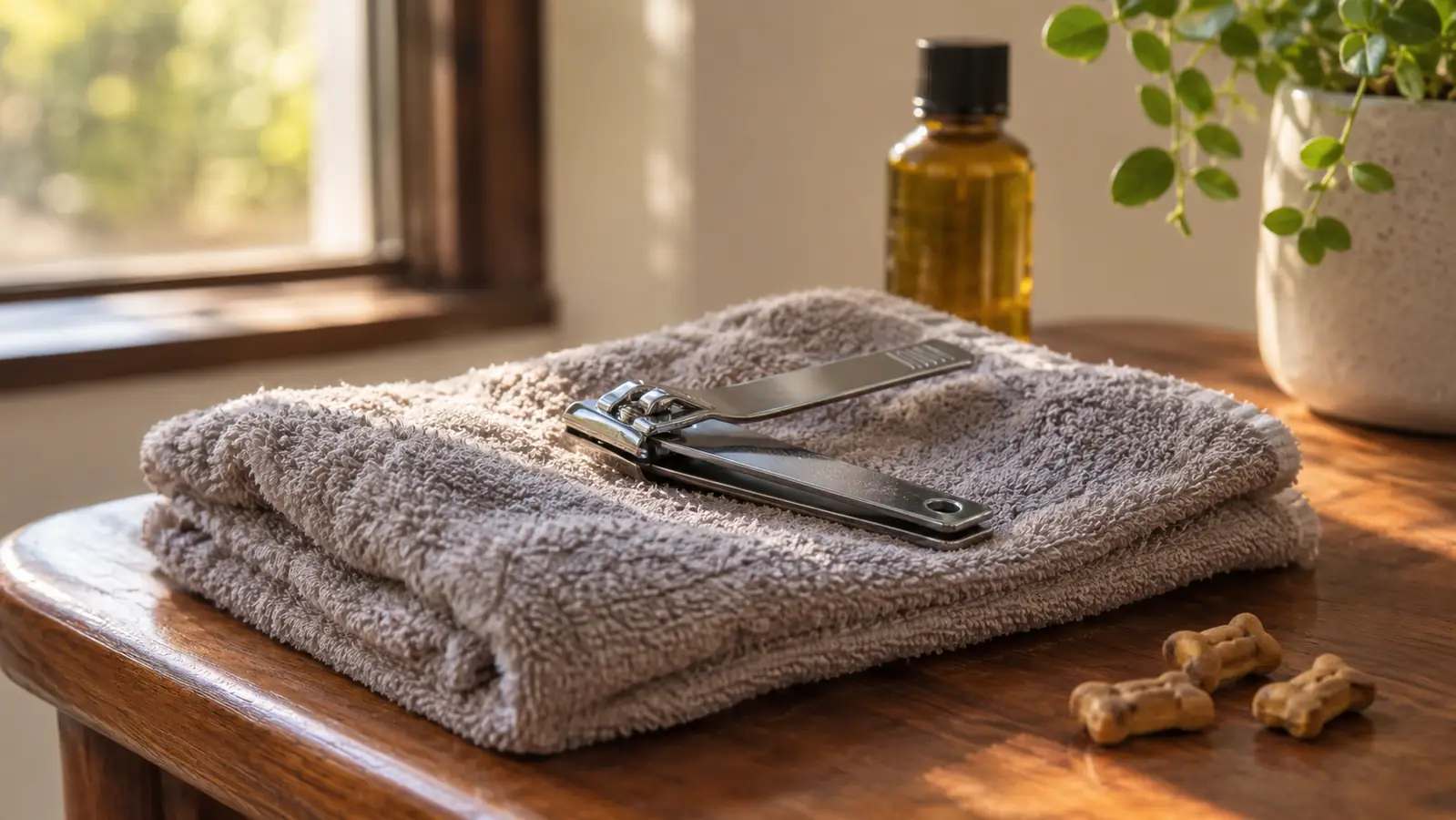
The third thing is the tip that appears right in the listing and that I ignored for weeks: apply a little baby oil to the nail to highlight the quick before trimming. It reads like filler. It is not. On Juniper, whose nails are dark and hard to read in ordinary light, a thin film of baby oil makes the pink line visible enough that I stopped holding my breath through every cut. I keep a tiny bottle of it on the folding table now, next to the towel. It is the least glamorous part of the whole routine and the single thing that has done the most for my confidence.
How I've Actually Used Them, Six Months In
Some context on who is doing the trimming. Juniper is seven, a long-haired Maine Coon mix, about fourteen pounds, and she is the easy one. I can do all her nails in one sitting without any drama, and I have never had to chase her. Pip is four, a short-haired orange tabby at roughly nine pounds, and he is the reason this review exists. He will do two or three nails, then he is finished, and I have learned to respect that rather than argue with it. He gets a treat, I set the clippers down, and I finish the rest with him later the same evening. That is the real routine, and it has held for six months.
Both cats get their nails done every two to three weeks. Sometimes it slides to three and a half in a busy month. The clippers live in the top drawer of my folding craft table in the spare room, next to the brush and a lint roller, and they come out every single time. That craft table is not a grooming salon. It is a folding table with a towel on it near a window, and I mention it because I want you to know this is not a professional setup producing professional results. It is a person in a spare room doing a small job every couple of weeks, which is exactly the situation most people reading this are in.
In six months of that, I have not cut a quick. I came close once, on Pip, and I stopped because I could see the line in time. That is the whole value of a clipper like this one, as far as I am concerned. Not that it does the work for you, but that it lets you see what you are doing while you do it. On the blurry, badly lit version of this job, every nail is a guess. On this version, I can put the edge exactly where I want it and take a small slice, and the small slice is the entire skill.
The Blade Is the Whole Story
The blade is concave and stainless steel, and the cut it makes on a cat nail is closer to a clean slice than a crush. That distinction sounds like marketing noise until you have felt the other version. A dull or flat-edged tool pinches the nail before it separates it, and a cat remembers a pinch for a long time. Juniper has a long memory for anything that pinched her, and she has never once objected to this clipper. The edge is still biting cleanly after six months of light use, and I have not sharpened anything. At this volume of work, a few nails every few weeks on two indoor cats, I do not expect to.
What I would tell anyone staring at the listing photos: look at the size first. These are 4.72 inches long and 2.36 inches wide, and they weigh 0.71 ounces. That is small. In this context, small is the feature, not a compromise. A smaller head and a shorter lever mean the clipper sits in the web of your hand where you can keep your eyes on the nail instead of on the tool. The full-size clippers I tried first physically blocked my view of the thing I was trying to cut, which is a ridiculous problem to have and an extremely common one.
Six months, two cats, a dozen sessions, and not one cut quick. That is not the clipper being gentle. That is the clipper letting me see the line.
One honest caveat about that blade. It is sharp, there is no guard sitting between the edges on mine, and the listing does not claim one. If you were hoping for a tool that physically prevents you from taking too much nail, this is not that tool, and I would rather tell you plainly than have you find out on a squirmy cat at nine at night. The safety here comes from taking one small sliver at a time instead of one confident cut, and from doing it in good light. That is technique, not hardware, and it is true of every decent clipper in this category.
The Grip, the Size, and What I Noticed in Month Five
The handle has a larger, softer grip than the drugstore clippers I had before, and it matters in a specific, unglamorous way. By the time I sit down to trim, my hands are dry from being washed for the third time, and a hard plastic handle gets slippery under those conditions. My grip shifts mid-cut and then I am holding my breath and starting over. The softer grip on these stays put. I have average-size hands, it fits without any strain, and I can keep it steady for the two or three minutes a session actually takes. That is not a small thing when the alternative is losing control halfway through a cut.
Month five is when I noticed the argument I would now make for these. My technique had gotten quick enough that the clippers were no longer the bottleneck. I was doing three nails on Pip's front paw, a treat, three more, and the tool was keeping up with me instead of holding me back. That is a boring sentence to write, and it is the whole goal. A tool you stop thinking about in the middle of a nervous job is doing its work. Pet Republique made a small, sharp, unremarkable pair of clippers, and unremarkable is exactly what you want in your hand at that moment.
What I Liked
- Concave stainless steel edge slices cleanly instead of pinching, and it is still sharp after six months of regular use
- Small at 4.72 inches, so you can watch the nail while you cut instead of guessing around the tool
- Larger, softer grip stays steady even with dry, freshly washed hands
- Light enough at 0.71 ounces that a session never tires out your wrist
Where It Falls Short
- No guard or safety stop between the edges, so a rushed cut is still a rushed cut
- It will not settle a cat that is fighting the hold, and no clipper will
- Compact handles are less comfortable if your hands are genuinely large
- You supply the light, the treats and the patience, and those are most of the job
None of the items in that second column is really a defect. It is the shape of the work. I have recommended these to two friends and in both cases I led with the same warning: the clippers are not going to fix the fight. If your cat will not let you hold a paw, the problem is the paw hold, and buying a different clipper just moves the argument to a new object in the drawer. The tool is not where the difficulty lives. It is just where people go looking for it first, because it is the only part you can buy.
Where the Routine Still Falls Apart
Six months in, the parts that still go wrong are not about the blade. Pip's back paws remain a negotiation. I get two nails on a good evening and I stop, and if I push past that point he remembers it the next time and we lose a week. Juniper's rear nails grow with a slight twist to them, and the concave edge handles the curve well but I still take them in two bites because I cannot see the quick as clearly back there. Neither of those is a clipper problem. Both of them are the reason I no longer believe anyone who says a tool made their cat easy.
The other thing that quietly matters is storage and upkeep. The clippers get wiped down with a tissue after each session and go back in the drawer, and the blade has not discolored or stiffened. I have not oiled the pivot, I have not taken anything apart, and I have not had a loose part. For a tool that gets handled by a slightly nervous person in poor light, that reliability is worth more than any single feature on the listing. It is also the reason I would buy the same pair again rather than experiment with a cheaper one that might arrive dull.
Who This Is For
This is for the person who already understands that home nail trims are a skill and not a purchase, and who wants a tool that stays out of the way while they learn it. If you have a cat like Juniper, one who tolerates being handled, these turn a ten-minute job into a two-minute one. If you have a cat like Pip, one who does two nails and leaves, these make it realistic to finish the other six later the same evening without a second battle. The listing also names kittens, rabbits, puppies and other small pets as intended users, and the small head suits that wider range of small nails just as well.
Who Should Skip It
Skip these if what you actually want is a guarded clipper that limits how much nail you can take, because you will be disappointed and possibly annoyed with me for not saying so louder. Skip them if your hands are large enough that a 4.72-inch tool feels like a toy, or if squeezing a short lever bothers your hands, since this is a compact design and it makes no apology for being one. And skip them if you are shopping for a solution to a cat who panics. Work on the panic first, with a towel, a quiet room and a helper, and come back for the clipper once the cat can be in the room with you.
The blade is worth it. The patience is still yours to bring.
Six months, two cats, no cut quicks, and an edge that still slices clean. If that is the standard you are shopping against, this is the pair I would buy again.
Amazon Check Today's Price on Amazon →