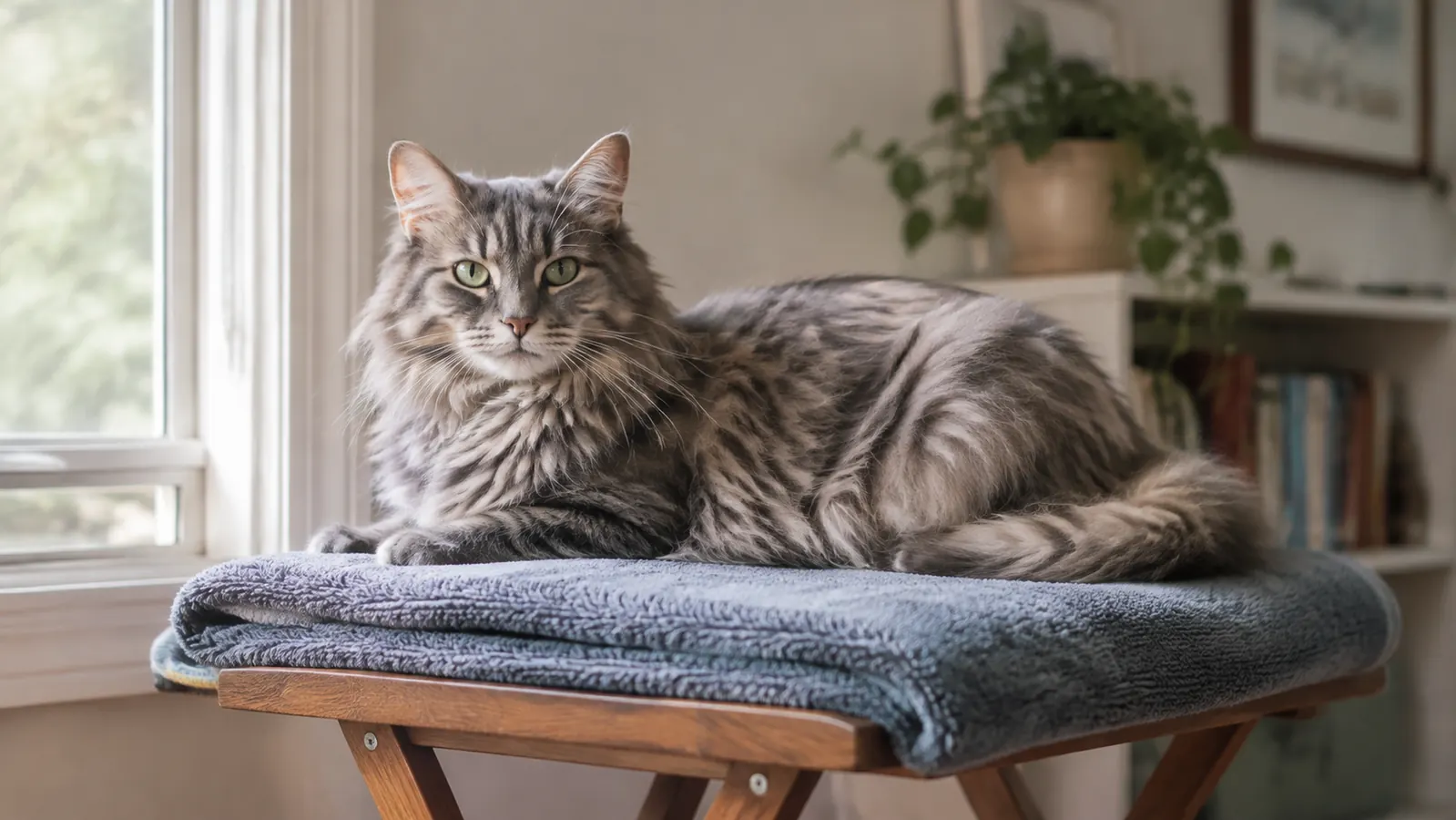
Juniper is seven years old, about fourteen pounds, and roughly half coat. She is a smoky gray Maine Coon mix with a plume for a tail, and she collects mats behind her ears and on the back of her hind legs no matter what I do. For the first two years I had her, every brushing session was a negotiation I lost. I would spread a towel on the folding table in the spare room, get the slicker out, and she would be off the towel before the bristles touched her. I would end up holding a brush with three hairs in it while she sat under the bed and glared at me. Two weeks later the mat behind her ear would be bigger, tighter, and closer to the skin.
If that sounds familiar, the brush is probably not your whole problem. I have been brushing Juniper most evenings for about eight months with an Aumuca self-cleaning slicker brush, and the honest version is that the tool helped but the order of operations helped more. The Aumuca is a small brush, 5.6 ounces and about 8.5 inches long, with 150 degree bent stainless steel needles and round rubber tips on the ends. There is a button on the handle that pushes the bristles back so the hair slides off the pad in one click. What it does not do is cut a tight mat out of a coat. Nothing does, short of clippers. What it does very well is everything that happens after the mat is already loose.
A brush that lifts loose undercoat instead of yanking at knots
The Aumuca slicker pulls dead hair off a long coat in short, light passes, and the one-click button dumps the whole pad into the trash instead of your lap. It is the second half of the job. The first half is your fingers.
Amazon Check Today's Price on Amazon →Why Brushing a Matted Cat Turns Into a Fight
A mat is not just tangled hair. It is hair that has wrapped around itself and tightened against the skin, and the skin under a mat behind an ear or on a flank is thin enough to lift with a fingernail. When you drag a brush through a tight mat, you are pulling that skin. Your cat is not being dramatic. She is telling you the truth, and she is telling you early.
The other half of the fight is timing. Most cats do not want a session. They want a quick pass and then to go back to the window. Ten minutes of brushing is a long time to a cat who only agreed to three, and the moment she decides she has had enough, the brush stops being a brush and starts being a thing she has to escape.
So the fix is not a firmer hand or a more expensive tool. It is a sequence: set the room, read the coat with your hands, break the mat with your fingers, brush the loose hair around it in short passes, and stop while the cat is still sitting on the towel. In that order, most evenings turn into three minutes and a treat. Out of that order, you get the wrestling match.
Step 1: Set the Spot and the Time Before You Touch the Cat
I brush Juniper on a folding craft table in the spare room, with a bath towel folded in half on top and the table pushed close to the window. It is not a grooming table and it does not need to be. What matters is that it is a spot she has been lifted onto a hundred times and never once ambushed on. The towel gives her feet something to grip, which sounds like a small detail and is not. A cat sliding on a slick surface is a cat looking for a reason to leave.
Timing matters as much as the spot. In my house the window is the evening spot, and Juniper claims it after dinner. That is when I brush her, most evenings, for a few minutes. Not in the morning when she is touring the house, not right after she eats, and never when she is already walking away from me. If she leaves the towel in the first thirty seconds, I let her go and try again the next evening. Two abandoned sessions in a row is information about the day, not a failure of the routine.
One more thing about the room. I keep the brush in the top drawer of the craft table rather than in a closet across the house. The cat hears the drawer, not a door slamming somewhere else. That sound becomes the start of the routine instead of a warning.
Step 2: Read the Coat With Your Hands
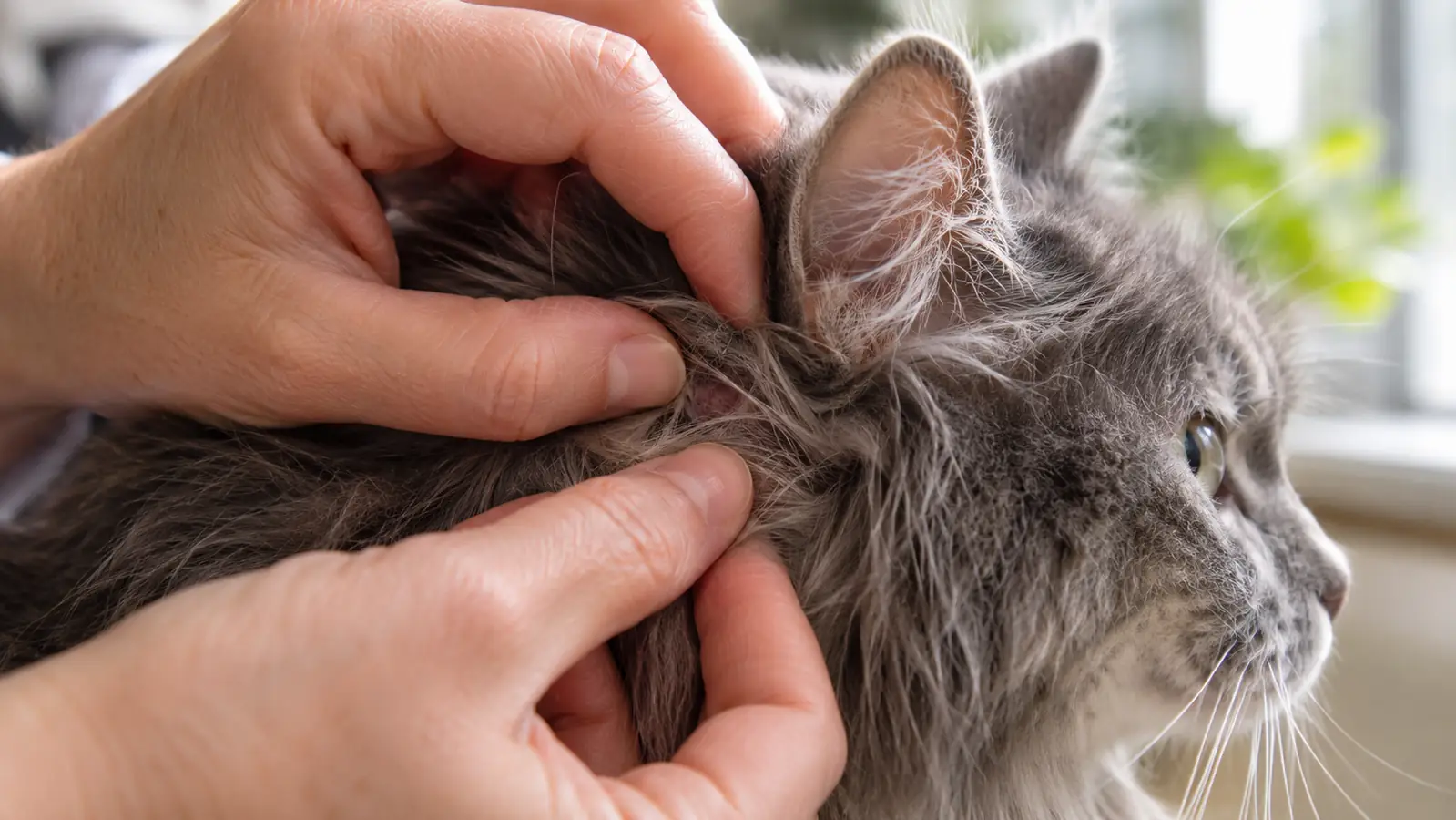
Before a brush comes out, I run both hands over Juniper from head to tail, slowly, the way I would check a piece of fabric for a pulled thread. On a long coat the mats hide in the same places every time: behind the ears, under the chin, in the armpits, along the flanks where the coat changes direction, on the back of the hind legs, and around the base of the tail.
You are feeling for the spot where your hand stops sliding and starts catching. A loose tangle moves under your fingers. A real mat feels like a small bean bag sewn to the cat, with a hard center and skin underneath it. Note where it is and roughly how big it is, then move on to the next area rather than stopping to fix it. This is the survey, not the work.
Two minutes of this changes what you do next. Hair you can run your fingers through is hair the brush can handle without a fight. Hair you cannot is not, no matter which brush you pick up. Knowing the difference is most of the skill.
Step 3: Loosen the Mat With Your Fingers First
This is the step people skip, and it is the one that actually ends the fight. A mat has to be broken into smaller pieces before any brush touches it. I hold the mat between my thumb and forefinger, close to the skin, so the pull lands on my fingers and not on Juniper, and I work the edges apart in small pulls. Then I split the mat down the middle and work outward from the split.
It is slow, and there is no way around that. The mat behind Juniper's left ear took four evenings of finger work, maybe two minutes each, before it came apart enough to brush. She sat through it because I never pulled skin, and because I stopped while she was still settled instead of waiting for her to leave.
If the mat is a solid pelt against the skin, or the skin underneath is red, broken, or damp, stop and book a groomer. That is not a brushing problem, and working at it at home is how cats end up with a nick or a sore patch that takes a month to heal.
The mat behind Juniper's left ear took four evenings of finger work and about ninety seconds of brushing a night. The brush never touched it until it was already loose.
Step 4: Brush in Short Passes, and Go Around the Mat, Not Through It
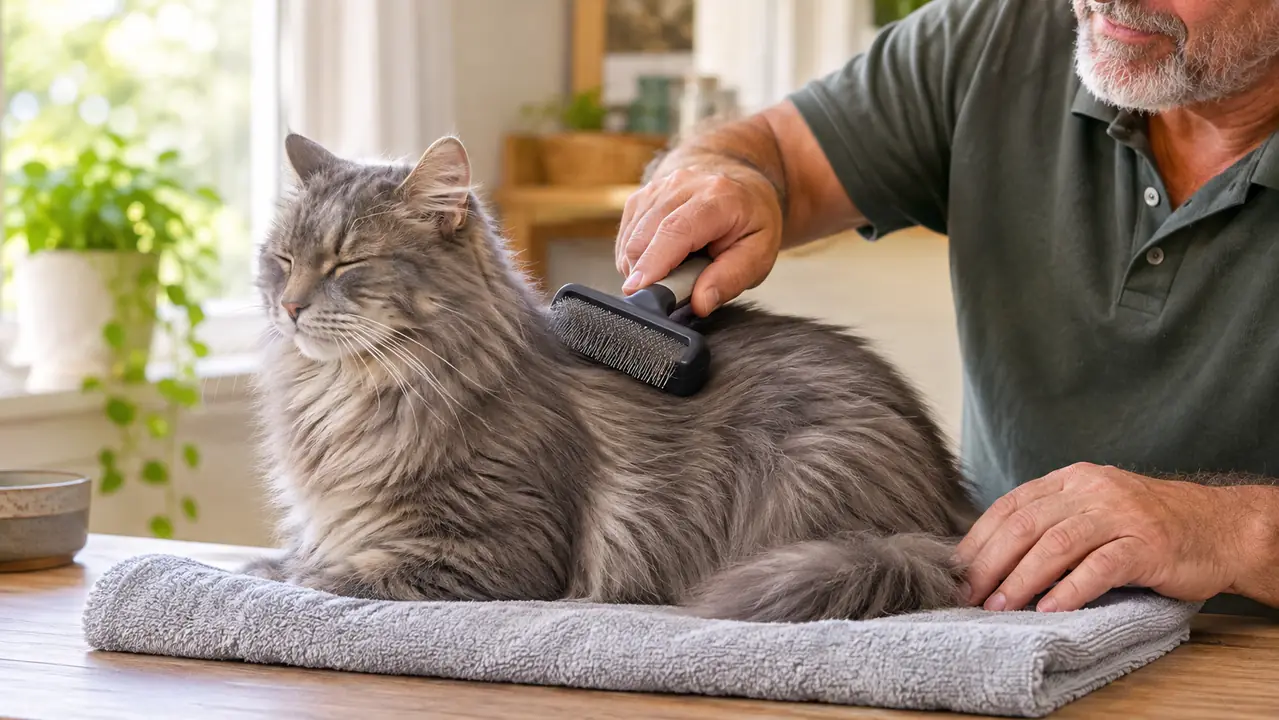
Once the coat is finger-clean in that one spot, the Aumuca comes out. I start at the shoulders and work back, following the direction the coat grows, in passes about the length of my hand. Light pressure. The 150 degree bent needles with the rounded tips reach under the top layer and lift dead undercoat rather than scraping across it, and you can feel them catch and release as you go.
Where a mat is still partly there, I brush up to the edge of it and then lift the brush away instead of dragging through the last half inch. The mat does not need to be brushed. It needs more evenings of finger work. Brushing the loose hair around it keeps the mat from growing back into the surrounding coat while you finish the job.
On Juniper I do the back and sides first because she is tolerant there, then the hindquarters, which she likes less, then the chest, which she allows for about four passes. Pip, my short-haired orange tabby, gets one light weekly pass with the same brush and nothing more. A short coat does not need it, and he has opinions about being asked twice.
Step 5: Stop Before the Cat Does, and Click the Button
Three to five minutes is a full session in my house. The sign that I have gone too long is not a bite. It is a tail that starts moving, or a back leg that lifts off the towel. When I see either one, I finish on the spot and put the brush down. Ending early every single time is how the routine survives. A short session that ends with the cat still sitting on the towel is worth more than a long one that ends with her under the bed.
Then the cleaning button. I hold the brush over the kitchen trash, press the button on the handle, and the bristles push back so the pad of hair comes off in one piece. It takes about five seconds, and it is the difference between a brush I reach for most evenings and one I avoid because pulling hair out of it is miserable. When I am done, the brush goes back in the top drawer of the craft table.
The last thing is a treat, immediately, every time. Juniper gets one whether she sat through the whole session or left halfway. The treat is attached to the table, not to her behavior. Eight months in, she walks over to that table most evenings on her own, which is not a love of brushing. It is a love of the sequence, and the sequence is what gets the mat handled.
What Else Helps
A brush does not reach everything, and a matting coat needs a few other things in rotation. The Aumuca handles the back, sides, and hindquarters on Juniper. For her face and chest, where the brush annoys her, I use a pair of small grooming gloves and one pass with the flat of my hand. For Pip, who will not sit still for a brush at all, the gloves are the entire grooming routine and that is fine.
Unscented cat wipes do the rest of the maintenance. I use them a few times a week on Juniper's hindquarters and paws, working from the back of the ears toward the tail and keeping well away from the eyes, and I run one over both cats' coats before my sister visits, since she is mildly allergic. Those wipes replaced most of the baths in this house. Neither cat gets bathed more than rarely, and when it happens it is because something got on them, not because it is on a calendar.
Nails matter to brushing more than people expect. A cat who can hook a claw into the towel is a cat who stays put. I do nails on both cats every two to three weeks with a small concave clipper, and Pip gets his in two or three nail installments with a treat in between, finished later the same evening. Their vet still checks teeth and coat once a year, and a brush does not replace that visit.
Start with your hands tonight and let the brush do the easy half
One finger-loosened mat at a time, three minutes on the towel, a treat at the end. The Aumuca is the part that keeps the rest of the coat from matting while your fingers catch up.
Amazon Check Today's Price on Amazon →