
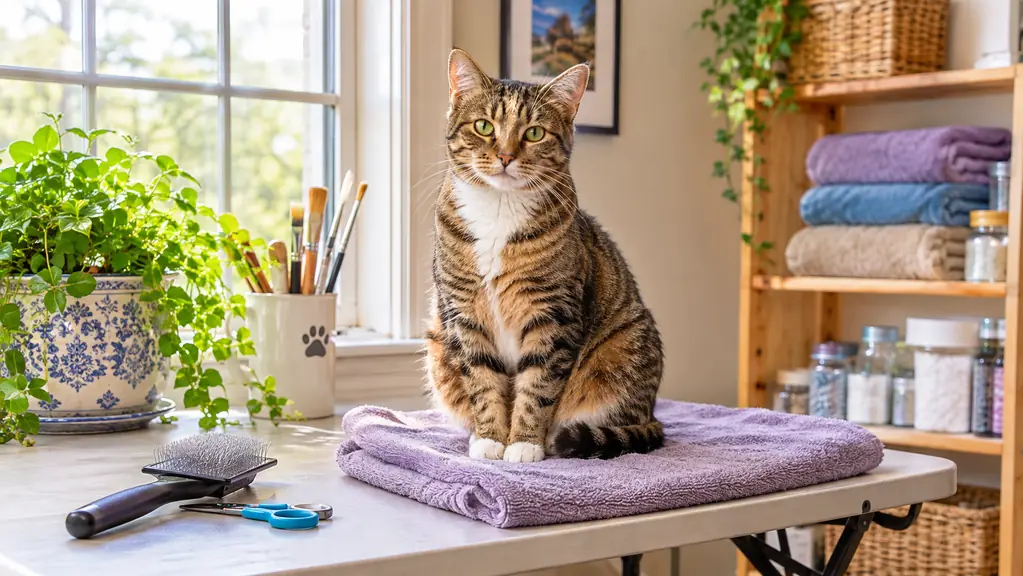
The first time I opened the pack of Paw Science Dental Finger Wipes, I expected to hate them. I have a seven-year-old long-haired Maine Coon mix named Juniper who sheds enough to build a second cat, and a four-year-old orange tabby named Pip who treats any hand near his mouth like a personal insult. Our vet mentioned early tartar on Pip's back teeth at his yearly checkup, and I did what a lot of cat owners do after that conversation: I bought a few dental products, used one, and felt mildly guilty about the rest. The Paw Science wipes are the one I kept reaching for. Two months in, I have a clearer picture of what they do well, what they do not do, and who should not bother.
This is not a review that claims a wipe replaces a toothbrush, a veterinary cleaning, or your own judgment. It is a review from someone who has stood in a spare room with a towel on a folding craft table, holding a cat who would rather be anywhere else, asking a practical question: is this easier than the alternatives I have already tried? For us, yes. With limits. The limits are the reason this is an honest review and not a commercial.
The Quick Verdict
Easy to start and genuinely useful on the front teeth, but it is not a replacement for the vet, and the back teeth still take patience.
Amazon Check Today's Price →The easiest dental add-on I have found for a cat who hates toothbrushes
Paw Science Dental Finger Wipes are unscented, no-rinse, and vet-formulated with simple ingredients. They will not replace the vet, but they make the between-visit routine small enough to repeat.
Amazon Check Today's Price on Amazon →How I've Used Paw Science Dental Finger Wipes
I started the wipes on a Sunday evening, mostly because Pip was sitting on the arm of the sofa and I was already thinking about his teeth. The listing says no rinse is needed, and I did not add one. I did not start with a full mouth. I started with the front teeth, one side, then the other, and stopped while both cats were still mildly annoyed instead of genuinely upset. Juniper got the full pass because she is the easier cat. Pip got a shorter turn. That is not a flaw in the product. That is cat handling.
My routine now is a few evenings a week, not every night. I keep the pack in the top drawer of the craft table next to the brush and the nail clippers, because a dental wipe that lives in a kitchen cabinet is a dental wipe I forget to use. I sit on the floor with my back against the table, put a towel over my lap, and let the cat come to me if possible. Juniper usually settles. Pip usually arrives, remembers what is about to happen, and tries to leave. The wipe itself is unscented, which matters in a house where one cat is suspicious of anything that smells like mint or medicine.
Before these wipes, I had tried a cat toothbrush exactly twice. The first time, Juniper tolerated it for about four seconds and then left the room with the dignity of a cat who had been deeply wronged. The second time, Pip treated the brush like a small, minty intruder and made it clear that my hand was not welcome near his face. I am not proud of that. I am just saying I understand why people give up. The wipes did not make my cats suddenly love dental care. They made the first step small enough that I could repeat it, which is a different and more useful thing.
Juniper is seven and about fourteen pounds, and she has the long coat that gets mats behind her ears if I blink. She tolerates the wipe the way she tolerates brushing: with a long-suffering expression and a brief window of cooperation. Pip is four, about nine pounds, and has a shorter coat but a stronger opinion. He will let me do the front teeth if I go slowly. The back teeth are a negotiation that involves a second person, a towel, and a treat afterward. The brand matters less than the handling here. Paw Science made a wipe that is easy to hold and easy to use, but no wipe on the market can make a cat agree with the plan.
What Nobody Tells You About Dental Finger Wipes
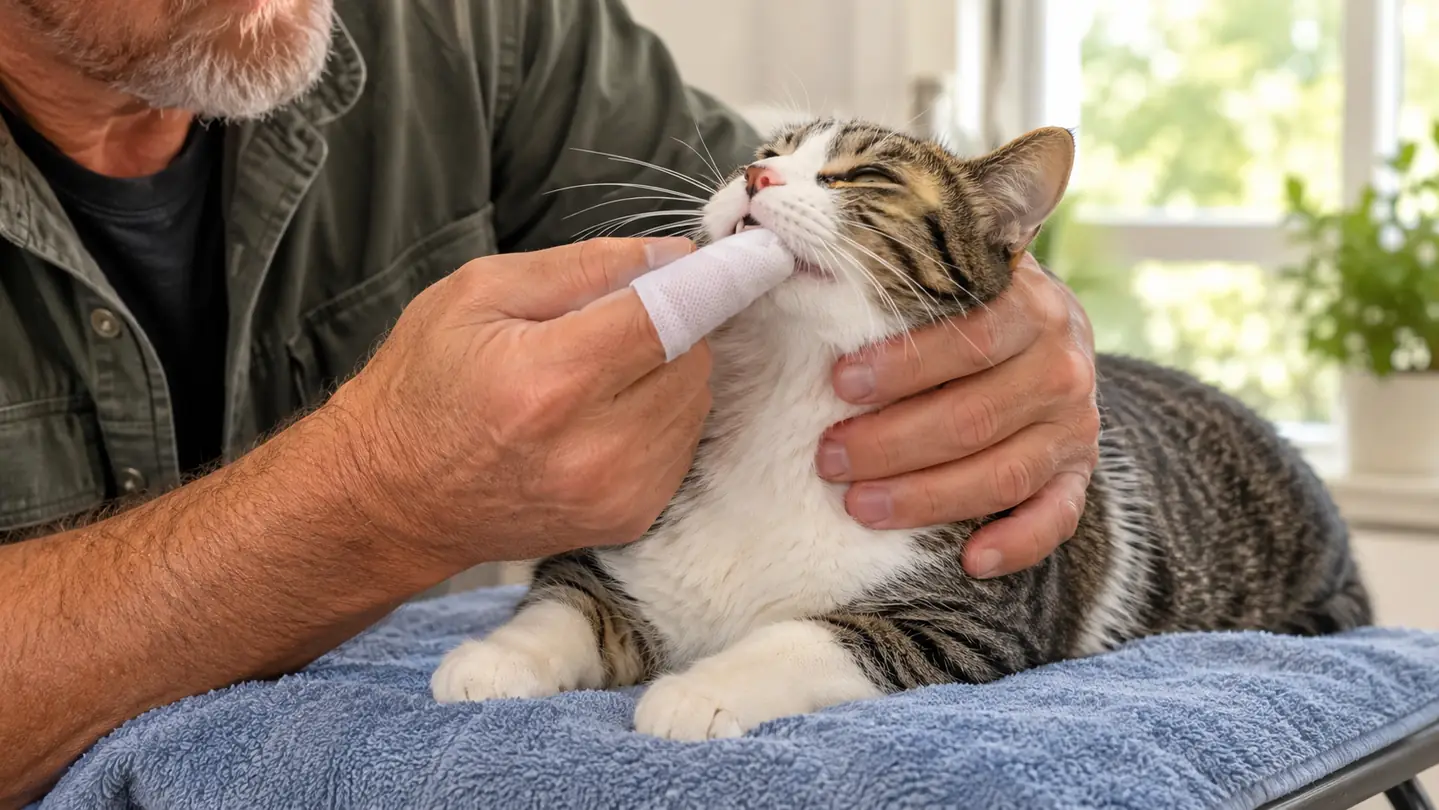
Here is the part I wish more reviews said out loud: a finger wipe is not a toothbrush with softer packaging. It cleans the surfaces you can reach, and it is excellent for the front teeth and the outside of the canines. The back molars, the ones a vet actually worries about, are hard to reach on a cat who is awake and has opinions. I can get the wipe along Pip's back teeth for a second or two, not for a full scrub. If your cat has visible tartar, bleeding gums, or a bad smell that has been building for months, a wipe is not the first call. The vet is.
That does not make the wipes useless. It makes them a maintenance tool. The listing says regular use removes plaque, helps fight tartar buildup, and supports healthy gums, and I believe that is the right frame. Regular is doing a lot of work in that sentence. A wipe once a week is not going to change much. A few calm passes several times a week, done consistently, is where I have seen the routine actually stick. Paw Science's formula is hypoallergenic and pH balanced, and it is vet-formulated with simple ingredients. Those are the claims that made me willing to put a finger in a cat's mouth. The no-rinse part is what made me keep doing it.
The other thing nobody tells you is that the cat sets the pace. My first week, I tried to do a full mouth in one sitting because I was thinking like a person with a dental appointment. Pip was thinking like a cat with a tongue and four legs. I got two front teeth and a dirty look. The second week I broke it into shorter sessions and got more done. Juniper got a slightly longer pass because she was calm. Pip got one side, a break, then the other side later. If you need a product to be fast and complete in one go, this is going to frustrate you. If you can work in short visits, it fits.
The other thing I learned is that the wipe works best when I do not make a production of it. I do not announce it, I do not chase anyone, and I do not turn it into a wrestling match. If a cat walks away, I let him walk away and try again later. That sounds obvious, but it is the opposite of how I used to handle grooming. I used to think finishing the task mattered more than keeping the cat calm. The wipes have made me better at stopping early. That is not a product feature. It is a side effect of using something that takes less time.
Two months in, the wipes have made the front teeth easier. They have not made me skip the vet.
The Parts That Are Genuinely Easy
The easy part starts before the cat is involved. There is no toothpaste to squeeze, no water to run, and no rinse step at the end. I take a wipe, use it, and throw it away. That sounds small until you have tried to brush a cat's teeth with a tiny brush and poultry-flavored paste while the cat is doing a full body twist. The no-rinse design is the reason I have kept this in the routine. It also means I am not chasing a cat around the house with a cup of water afterward, which is its own victory.
The wipe is also unscented, and that matters more than I expected. I tried a minty pet dental product once and Pip acted like I had betrayed him on a personal level. The Paw Science wipes do not announce themselves. There is no perfume cloud, no fake chicken smell, and no lingering taste that makes the cat drool and run for the water bowl. Juniper does not love it, but she does not fight it. Pip still objects to the back teeth, but he objects to the handling, not the smell. That is a distinction I have learned to appreciate.
The formula is another easy part for me. Hypoallergenic, pH balanced, vet-formulated, simple ingredients. I am not a veterinarian and I cannot verify a formula from my spare room, but I can tell you that neither cat has had a reaction, red gums, or a change in appetite after two months. That is my experience, not a guarantee for every cat. I also like that the product is designed for both cats and dogs, which makes it easier to recommend to friends with mixed households. It does not mean every pet will accept it. It just means the package is not trying to be species-specific.
The Parts That Take Patience
The hard part is the back of the mouth. A cat's mouth is small, and a finger is not. I have to lift Pip's lip gently, slide the wipe along the outer surface of the teeth, and get out before he decides he has had enough. The front teeth are simple. The canines are manageable. The molars are a brief pass at best. If you are expecting to scrub away years of tartar with a finger wipe, you will be disappointed. If you are expecting to make daily maintenance less of a battle, you are in the right place. The honest review is that this product is better at prevention than at repair.
Pip is the test case. He is four, he is strong for nine pounds, and he has a way of turning his head at the exact moment the wipe reaches his back tooth. I have learned to do his front teeth first, give him a break, and finish the back teeth later if he is still willing. Some evenings he is not willing, and I stop. I would rather have a cat who lets me near his mouth tomorrow than a cat who wins a fight tonight. The wipes are not a substitute for patience. They are a tool that works when the cat is calm and the person is patient.
The other limitation is that I cannot see what is happening under the gum line. I can see the front teeth. I can smell the breath. I cannot measure plaque at home, and I would not claim that the hard tartar on Pip's back tooth disappeared because I wiped it for two months. It did not. The vet still checks their teeth yearly. The wipes have made the between-visit care easier, not the visit unnecessary. If a product promises to replace professional dental care, put it down and call your vet. This one does not promise that, which is one reason I trust it more.
What Two Months Changed, and What It Didn't
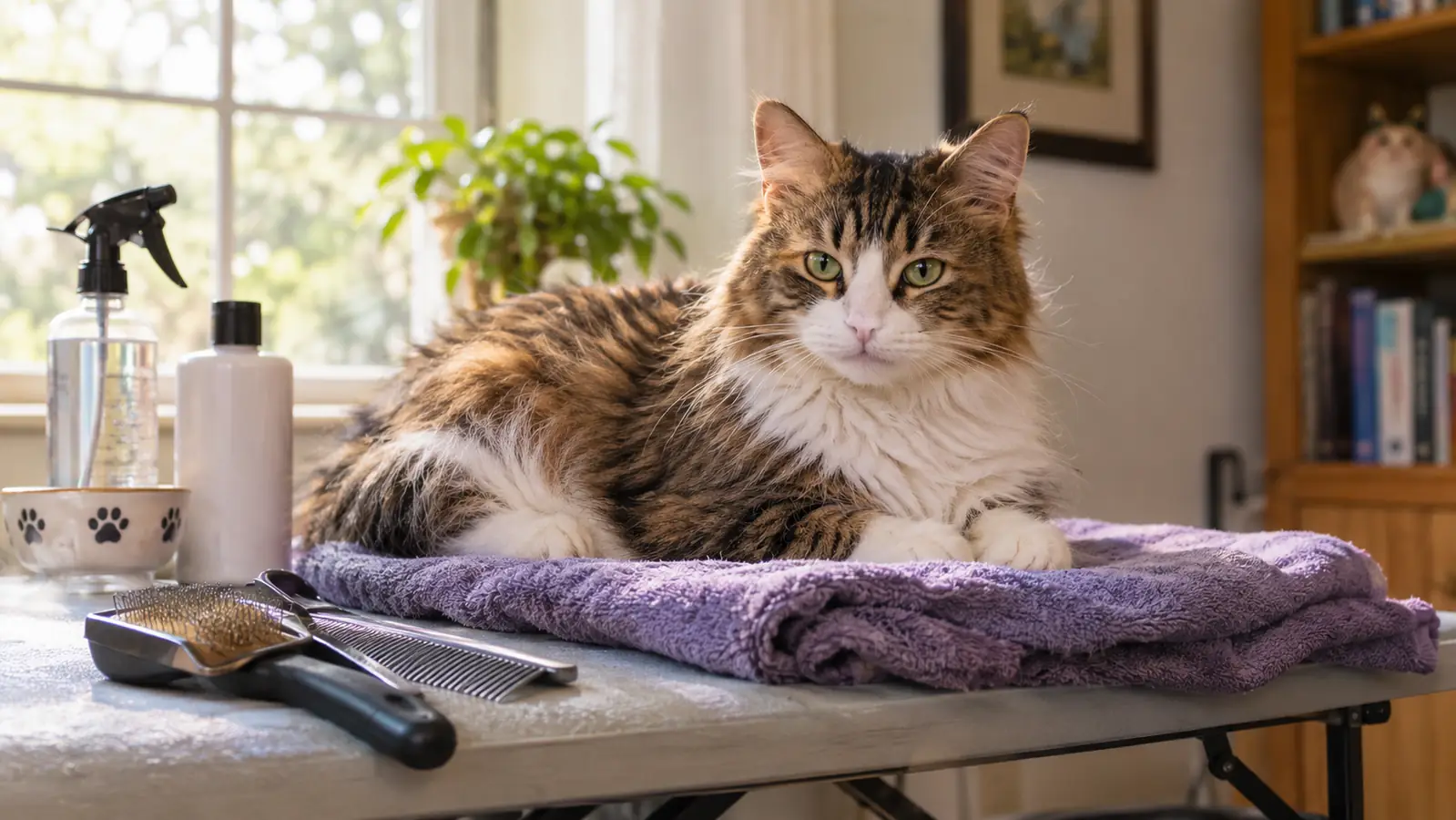
After two months, the change I notice most is not a dramatic one. Pip's breath is less sharp on the evenings I have been consistent. The front teeth look cleaner to my eye, and the wipe comes away with more than it did in the first week. Juniper's mouth is easier to check because she is used to the routine now. That is the kind of change a wipe can deliver. It is not a before-and-after photo. It is a small, boring improvement that comes from doing a short task several times a week.
What did not change is the tartar on Pip's back teeth, at least not in a way I can honestly measure. What did not change is his opinion about having a finger in his mouth. What did change is my routine. I no longer dread the whole process, because I know it can be three short passes and a treat. I know the wipes are in the drawer, the pack is easy to open, and I do not need to prepare anything. That ease is the real benefit. It is not glamorous. It is the reason the habit has lasted.
I also keep the expectations small on purpose. I am not trying to reverse years of tartar with a finger wipe. I am trying to make the mouth a place I can touch, so the vet can examine it, so I can notice a problem earlier, and so the cats do not learn that hands near the face always mean a fight. In that sense, the wipes have been useful beyond the teeth. Juniper lets me check her gums now. Pip still complains, but he complains and stays. For a cat who used to leave the room when I picked up a brush, that is progress.
What I Liked
- No toothpaste, water, or rinse step
- Unscented, so it does not start a fight over smell
- Hypoallergenic and pH balanced formula
- Vet-formulated with simple ingredients
- Short sessions are possible, which helps with cats who hate toothbrushes
Where It Falls Short
- Back molars are still hard to reach on an awake cat
- Not a replacement for veterinary dental cleaning
- Requires consistency to mean anything
- A cat who bites or hates handling may not tolerate it
Who This Is For
This is for the cat owner who has a cat that will let them near their mouth, even if it takes a few tries. It is for the person who has already tried a toothbrush and given up, or who knows they are not going to brush every night but can manage a wipe a few times a week. It is for a household with more than one cat, where one cat is easy and one cat is Pip. It is also for the owner whose vet has mentioned early tartar and who wants to do something between checkups. Paw Science is a reasonable first step for that person. It is not the whole plan, and it should not be.
Who Should Skip It
Skip it if your cat bites, if your cat has bleeding gums, loose teeth, or a mouth that smells bad enough to clear a room, or if you are looking for a product that replaces a veterinary dental cleaning. Skip it if you know you will not use it consistently, because a pack that sits in a drawer is not care. Skip it if you want a one-and-done solution. Also skip it if you are not willing to go slowly. The wipes are easy for me because I have put in the handling time. They will not do the handling for you. If you want a product that does the work while your cat naps, this is not it.
If your cat will let you near their mouth, start here
Two months in, this is the dental wipe I keep in the drawer. Use it slowly, a few teeth at a time, and keep the yearly vet check. Paw Science made the routine smaller, not the vet unnecessary.
Amazon Check Today's Price on Amazon →