
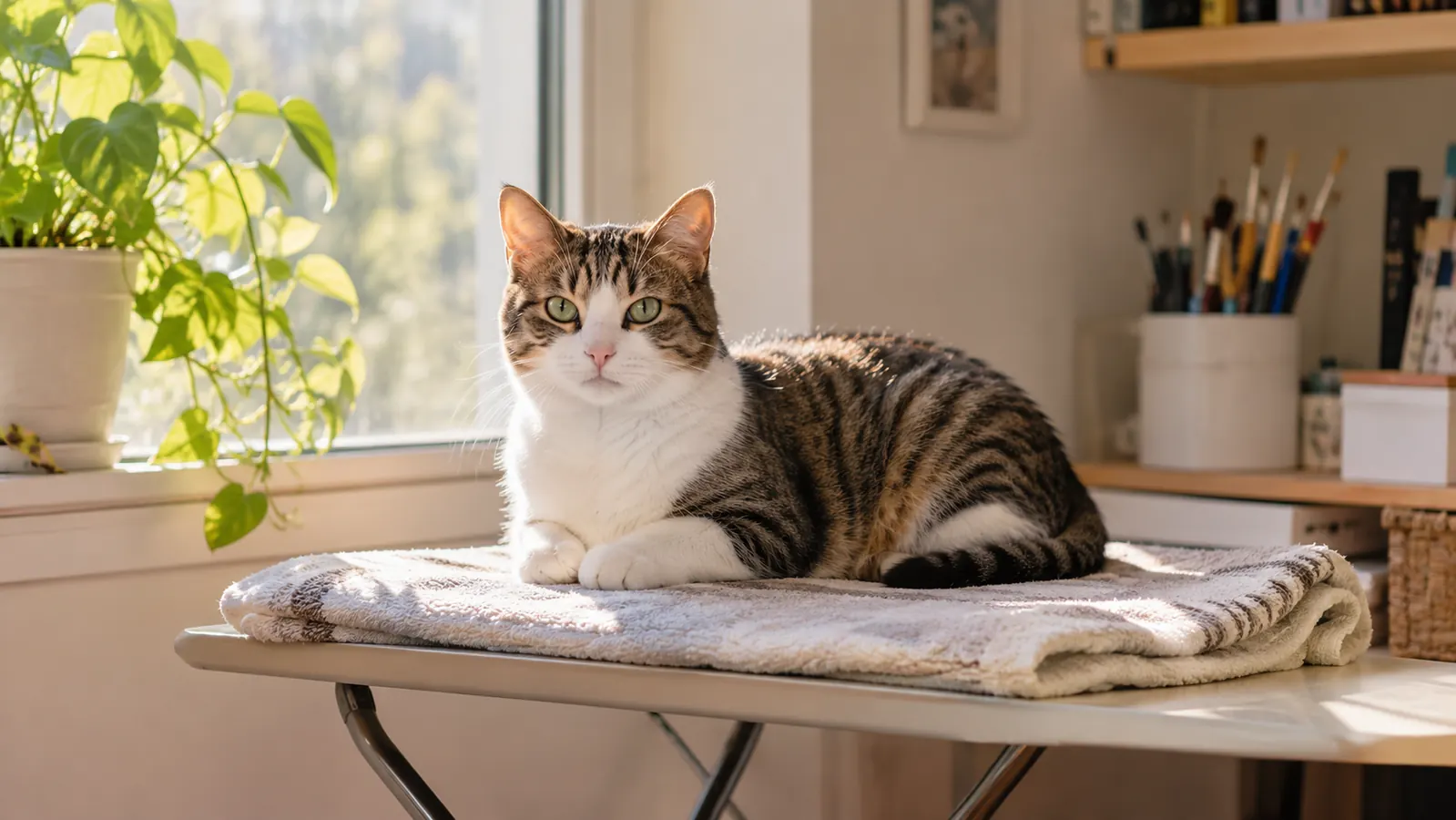
If you have ever tried to brush a cat's teeth, you already know how that goes. I bought a cat toothbrush two years ago. It is still in its package, behind the good scissors in the craft table drawer, and I have made my peace with it. Pip is four, a nine-pound short-haired orange tabby who fights nail trims and treats water like a personal insult. At his annual checkup the vet used a word I had been hoping to avoid: tartar. Early, on his back teeth. Nothing to panic about, she said, but the kind of thing that quietly gets worse. She asked what I was doing at home. I said nothing, honestly. She did not tell me a toothbrush was the only answer. That is how a container of Paw Science dental finger wipes ended up on my folding craft table in the spare room, next to a towel and a very suspicious cat.
I have now used them on both cats, a few evenings a week, for about two months. Juniper is seven, a fourteen-pound long-haired Maine Coon mix, and she is the easy one. Pip is the reason this review exists. What follows is what actually happened in my house, what the wipes did well, and the parts I would have wanted to know before I bought a second container.
The Quick Verdict
A no-rinse finger wipe that got me doing nightly dental care instead of nothing at all. Juniper tolerates it, Pip needs two visits and a treat, and neither cat has been spared a professional cleaning.
Amazon Check Today's Price →What replaced the toothbrush that never left its package
One wipe over a fingertip, no rinsing, unscented. Two months in on two cats and it is the only home dental care either of them has ever actually received.
Amazon Check Today's Price on Amazon →How I've Used It
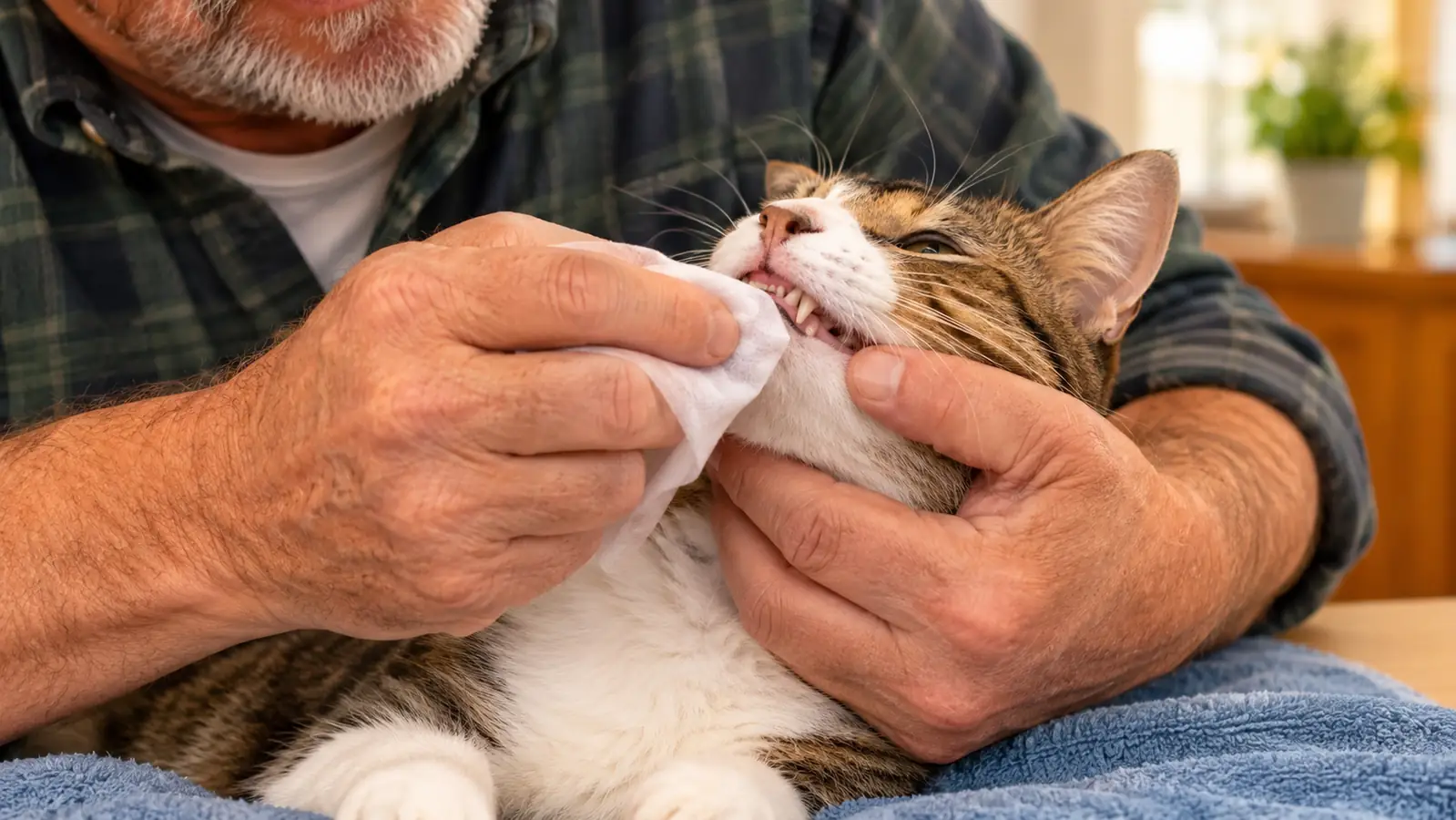
The routine is small, and that is the point. A few evenings a week, after the cats have eaten and settled, I take one wipe, work it over my index finger, and lift a lip. Back of the mouth toward the front on each side, avoiding the eyes, no rinsing afterward. The whole thing takes less time than brushing my own teeth, which is the only reason it has survived two months in a house with two cats and a full-time craft habit.
Juniper goes first because she is calmer. She sits on the towel, I do the outside of her upper teeth on both sides, then the lowers, and she leaves. She does not love it. She tolerates it, which for a seven-year-old long-haired cat is a genuine compliment. Pip is a two-part job. I do the front teeth and the easy side, give him a treat, let him walk away, and pick him up again ten minutes later for the rest. Some evenings I only get three teeth. Three teeth is still better than the nothing I was doing before.
Two things I learned the hard way. Dry fingers slip and wet fingers slide, so I keep a paper towel down and go slowly. And I was pressing harder than I needed to at the start, which Juniper told me by pulling her head back. Lighter pressure, slower pace, and she stopped objecting. Unscented matters more than I expected, too. Pip has a sensitive nose and he will walk away from anything that smells like mint, so a wipe with no perfume on it was the difference between a session that happened and one that did not.
I timed it once, out of curiosity. From lifting Juniper onto the towel to setting her back down was ninety seconds. Pip's two visits together run closer to four minutes, and most of that is him walking away and coming back. I do them on the same towel, on the same folding table by the window, in the same order every time, Juniper then Pip, because a cat is a small conservative and a routine she can predict is a routine she stops fighting. The order of the teeth matters less than the order of the evening. On the one night I broke the pattern and started with Pip, I got two teeth and a swatted hand for my trouble.
What a Dental Finger Wipe Actually Is
It is a small wipe you put over your fingertip instead of a brush. The listing describes the design as patent-pending, hypoallergenic, and pH balanced for a pet's mouth, and it calls the ingredients vet-formulated and simple. It is a no-rinse product, which is the entire reason it works in a house like mine. There is no foaming, no spitting, no chasing a cat around a bathroom at ten at night.
The container is small and light, a little over ten ounces on my kitchen scale, and it lives next to the treat tin on the counter instead of in the craft table drawer. That placement is deliberate. Something I have to open a drawer to find is something I will forget by nine o'clock. Paw Science sells these unscented, and the listing gives no flavor menu to choose from, which suits me, because a mint option would just be another way to lose Pip before we start. I have knocked the container onto the floor twice and the wipes inside stayed usable.
I want to be careful here, because I am a former cosmetics counter lead, not a veterinarian. I can tell you what the label and the listing say. I cannot tell you the chemistry is flawless, and I am not going to pretend otherwise. What I can tell you is that the thing I was doing before was nothing, and the thing I am doing now is something, and that shift is worth more than a perfect ingredient panel I would never be able to verify.
The finger format is the feature that decides whether you use it. A brush is a tool you have to aim. A finger is something you already know how to move around a cat's face, because you have been petting that cat for years. That sounds like a small difference. It is the difference between a product that lives in a drawer and one that lives on my table.
Two Months In: What Actually Changed
Breath first, because that is what other people notice. Pip's breath was never room-clearing, but it had an edge to it, the way a fish counter smells at the end of the day. Around week three my sister picked him up and said he smelled fine. That is not a clinical measure. It is the measure I have.
Rough markers, since I did not keep a spreadsheet. Week one was mostly me learning to be slow and both cats learning that the towel meant a finger near the mouth and then a treat. Week two, Pip stopped leaving the room when I sat down on the towel. Week four was the first evening I lifted his lip and did not wince at the smell. Week six I noticed the gumline along his lower canine looked pink rather than red. Nothing dramatic happened anywhere in that stretch, and that is roughly what I expected from a wipe and what I would want you to expect too.
The tartar is the honest part. The thin brown line on Pip's back tooth has not vanished. It looks lighter to me, and the gumline beside it looks less angry, but I am a woman with a flashlight and a phone camera, not a dental radiograph. I will know more at his next checkup, and I am not going to claim that two months of wipes did what a professional cleaning does. They are not the same thing and nobody should tell you they are.
Behavior changed more than I expected. Pip used to vanish the moment I sat down on the towel. Now he stays, ears back, waiting for the treat, which is not the same as enjoying it but beats a chase through the house. Juniper has started to lean into it slightly on the left side, which is the closest thing to enthusiasm I have ever gotten from her about anything grooming-related.
And the bigger change is that I do it. That sounds like a joke. It is not. The toothbrush sat in that drawer for two years without ever touching a cat. The wipes have been used a few evenings a week for eight weeks straight, which is more home dental care than both cats combined have had in their entire lives.
The toothbrush sat in a drawer for two years. The wipes have been used eight weeks straight. That is the whole review.
Where It Falters
It does not get between the teeth. A brush reaches into the gaps and a wipe goes over the surface, so if I am being accurate it cleans the flat parts and the gumline and not much else. If your cat already has significant buildup, this is a maintenance tool, not a rescue tool. My vet still checks both cats' teeth every year and I still expect her to find things I cannot see.
The back molars are a negotiation. You have to lift the lip and get a finger into a mouth roughly the size of a plum. Pip will give me the front three-quarters and then he is done for that session. Juniper lets me get further back, but she is seven and she trusts me, and not every cat arrives at that place. A younger, more nervous cat will set your pace, not the other way around.
There is also a limit to what a wipe can tell you. You are looking at the outside of a tooth by lamplight while a cat's head moves. Twice I have convinced myself something looked better when the honest answer was that I had changed the angle of the flashlight. If you need to know what is really happening in your cat's mouth, that is a vet with a probe, not me on a Tuesday. Paw Science does not claim otherwise on the listing, and I am not going to claim it for them.
Consistency is the whole game and it is also the weak spot. Skip a stretch and you are roughly where you started, because you stopped removing what accumulates. I had a chaotic week in the middle of this, six days without doing anybody's teeth, and I could tell the difference in Pip's breath.
One practical annoyance: cat hair gets on the wipe. Everything in my house has cat hair on it, including me, and a wipe that has been sitting out picks up a little fluff before it goes anywhere near a mouth. I shake one out over the sink first, which costs two seconds and saves a weird moment.
What I Tried Before, and Why It Didn't Stick
The toothbrush, obviously. Also gauze wrapped around a finger, which is the old shelter trick. Gauze works about as well as these wipes on the flat of the tooth, but it slides around, it unwraps, and I was guessing at how much pressure to use. The Paw Science wipes stay put because they are made for a finger rather than borrowed from a first aid kit. That is a small design decision that changes whether the job gets done.
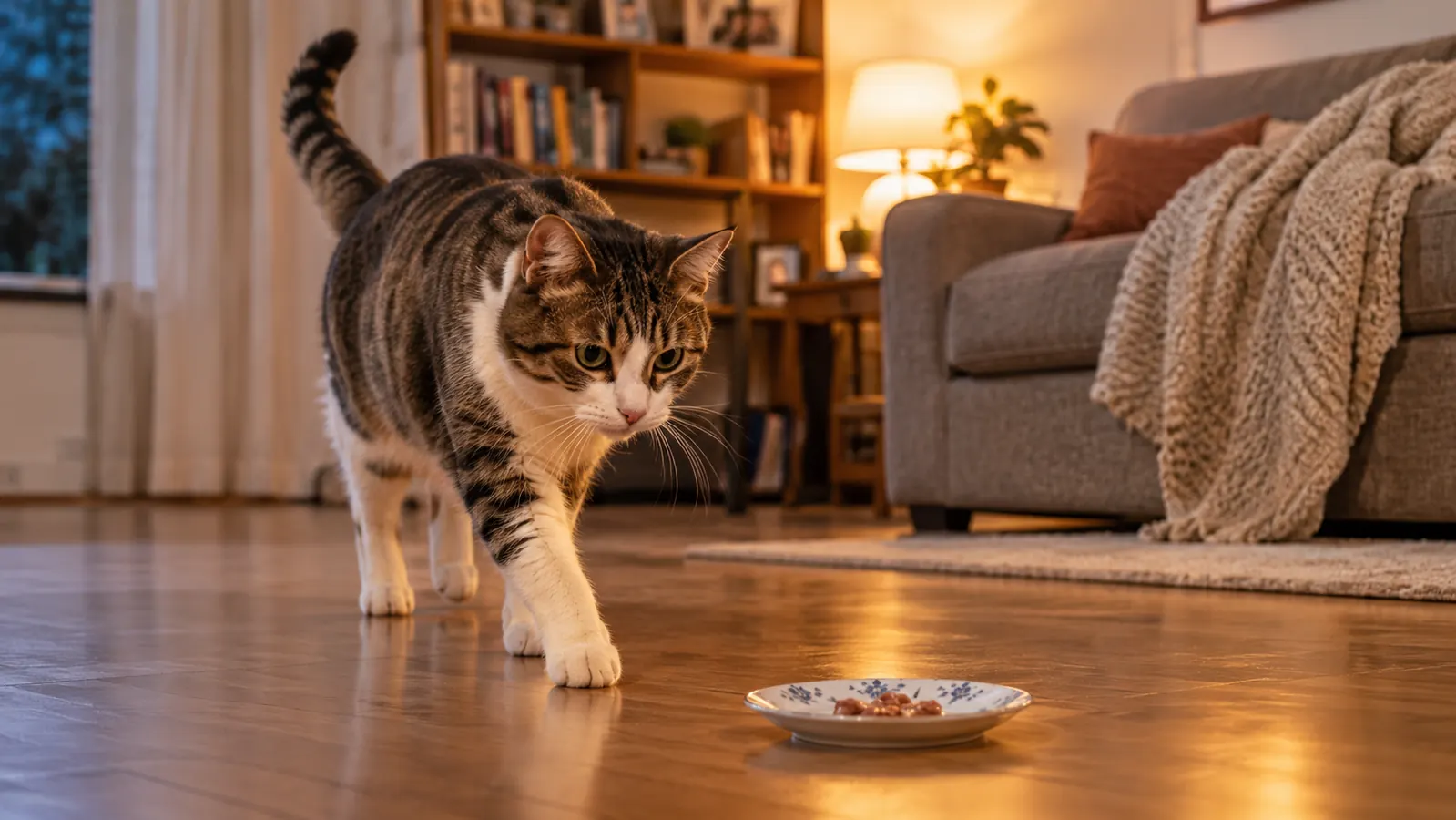
I tried dental treats. Pip liked them, which was the problem, because they are calories and he is nine pounds and does not need extra calories. I tried a water additive for about a month and have no idea whether it did anything, because I could not see a change and neither could anyone else in the house. I also stood in the pet aisle and nearly bought a vet-brand wipe. The two are close enough that the difference comes down to how a wipe fits your finger and how your cat reacts to the smell, and I went unscented because of Pip's nose.
What made this stick where the others did not was the barrier, honestly. A wipe over the fingertip means I am not putting bare skin next to a tooth that Pip is thinking about clamping down on. It also means I can feel where I am without a plastic handle getting in the way of a small mouth.
What I Liked
- No rinsing, which removes the step that made brushing impossible in my house
- The finger format fits a cat's face far better than a brush handle does
- Unscented, which matters for cats that walk away from mint
- Got me to a few evenings a week for two months, which no other version did
Where It Falls Short
- Does not clean between the teeth the way a brush does
- Back molars still take patience and two sessions with a squirmy cat
- Requires consistency, and a skipped week shows in your cat's breath
Who This Is For
Cat owners who have already lost the toothbrush fight and are currently doing nothing instead. Owners whose vet has mentioned early tartar or gum inflammation and asked them to start something at home. People with a cat who will sit on a towel for a minute and a half but will not sit still for a two-minute brushing session. Anyone who has been bitten on the fingertip and would like a barrier between their skin and a tooth.
It also suits a two-cat house where one cat is easy and one is not, because the same product works for both at completely different speeds. I use it on Juniper in one steady pass and on Pip in two visits with a treat in between, and the difference is technique, not product.
Who Should Skip It
If your cat has heavy tartar, gingivitis, or a history of extractions, this is not the thing to start with. Call the vet first and let a professional look. If your cat will not let you near their face at all, work on that separately with a finger and a lot of patience, because a wipe is still a finger in a mouth and the wipe itself will not fix that. And if you know in your gut that you will not do it a few times a week, buy nothing. A container of wipes in a drawer is just a more expensive version of the toothbrush I already own.
The version of cat dental care I actually kept doing
Unscented, no-rinse, made to ride on a fingertip. If a toothbrush has been sitting in your drawer for two years, this is a fair place to start again, as long as you can give it a few evenings a week.
Amazon Check Today's Price on Amazon →