
Pip has four years of orange tabby opinion and no patience at all for a toothbrush. So when my vet told me at his yearly checkup that she could see early tartar on his back teeth, I did what most people do. I bought a cat toothbrush and a tube of poultry-flavored toothpaste, sat down on the spare-room floor, and lost the fight in under ninety seconds.
Two months ago I switched to something far less impressive looking: a tub of Paw Science dental finger wipes. It is a textured wipe you wear over your fingertip. No rinse, no paste, no handle to wrestle with. I use it on both cats, a few evenings a week, and it has turned a wrestling match into a chore I can finish standing up. Juniper, who is seven, long-haired, and generally reasonable, lets me do her whole mouth. Pip lets me do the front teeth and we negotiate about the back.
The four-second version of brushing your cat's teeth
Paw Science dental finger wipes are vet-formulated, unscented, and no-rinse. I keep the tub in the top drawer of the craft table and pull one out after dinner. It is the only dental routine Pip has ever sat still for.
Amazon Check Today's Price on Amazon →What You Need (It Is a Short List)
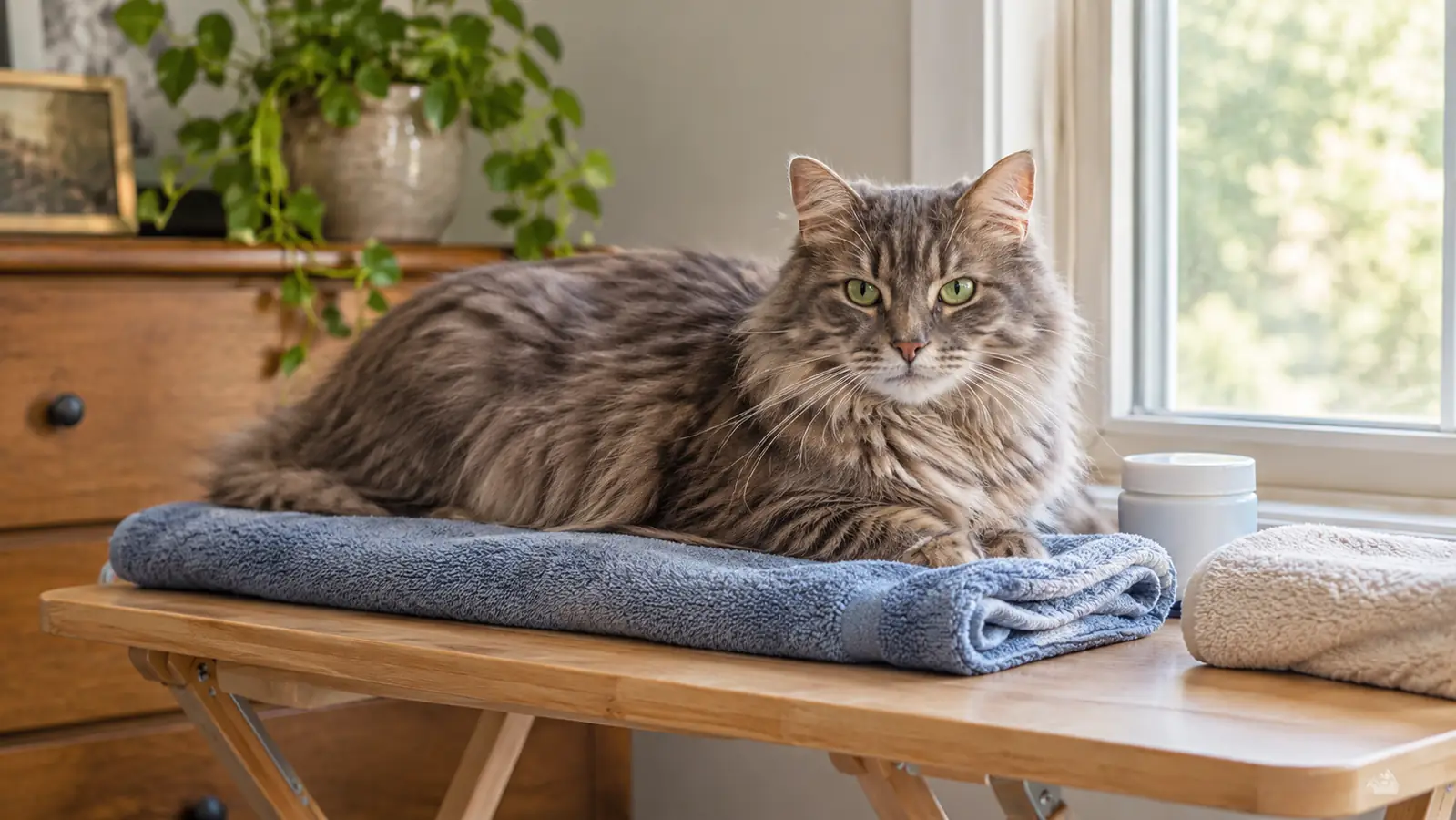
One tub of finger wipes, one towel, and a treat within reach. That is the whole kit. No toothbrush, no paste, no cup of water, because there is no rinsing step. I lay the towel on the folding craft table, set the tub on the corner, and put three treats in a small bowl where I can reach them without standing up.
Wash your hands before and after. Keep your own nails trimmed short, since a long nail under a thin wipe is a scratch waiting to happen. If your cat has a mat or a sore spot on his face, deal with that on a different day. You want his head calm and uncomplicated before you go anywhere near his mouth.
Why a Finger Wipe Works When a Brush Doesn't
A toothbrush needs two hands and a cat whose head is not moving. That is a lot to ask of an animal who reads restraint as a threat. The moment you hold a cat's skull still, most of them start backing up, and the brush ends up doing more work on the inside of the cheek than on the teeth.
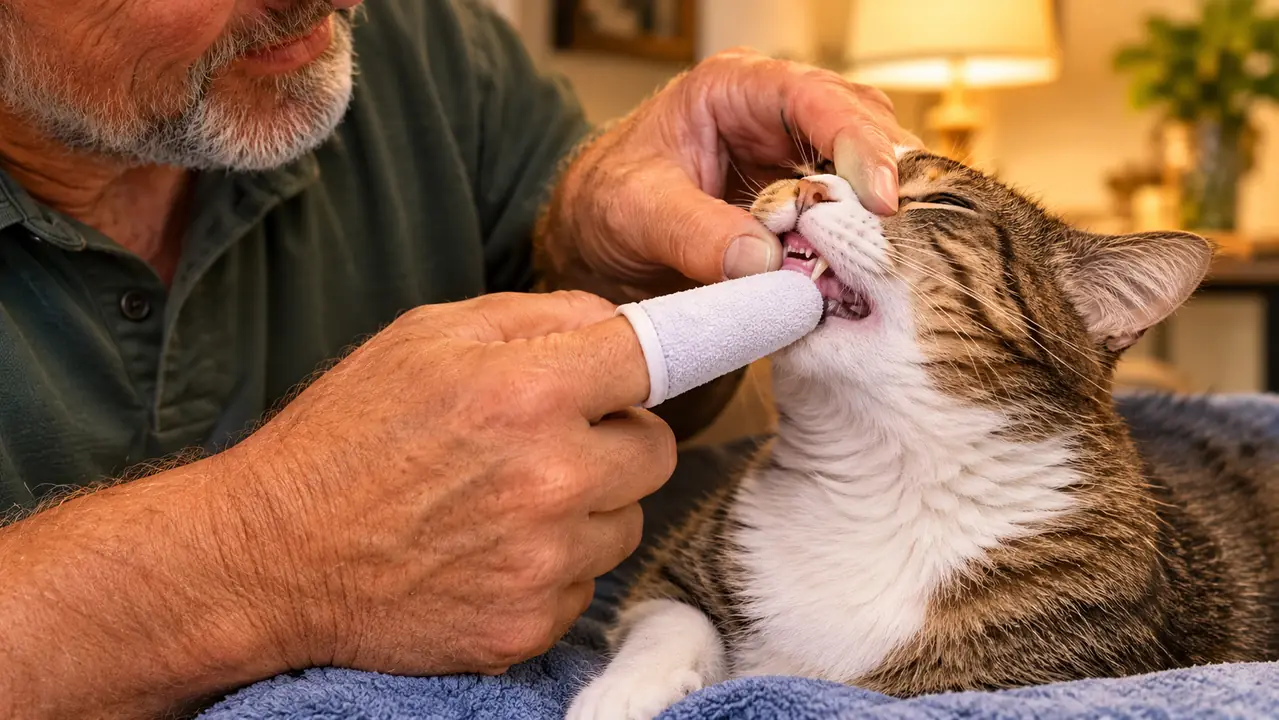
A finger wipe asks for one hand and no restraint. You lift the side of the lip with your thumb, slide the fingertip in along the cheek, and reach the outside of the molars, which is where my vet found Pip's tartar in the first place. Paw Science lists the wipes as hypoallergenic and pH balanced for a pet's mouth, made to be used without rinsing, with regular use removing plaque and helping fight tartar. They are unscented, which matters more than it sounds. A scented wipe in a cat's mouth is the fastest way to teach him that the whole ritual is bad news.
You are not going to match a cleaning under anesthesia with a wipe, and I am not going to pretend you can. What you can do is interrupt the buildup on all the days between visits, which is most days.
Step 1: Pick the Ten Minutes Your Cat Is Sleepiest
Timing does more for this than technique. I do teeth in the evening, maybe forty minutes after dinner, when Juniper has moved to the towel on the folding craft table and Pip is flat on the back of the couch. A cat in that state will tolerate a finger in his mouth for a few seconds before his brain catches up. A cat at seven in the morning will not.
What I avoid: the moment I get home, because both cats are wound up and underfoot; right after play, when Pip is still doing his sideways gallop around the living room; and any evening when someone new is in the house.
One cat per session. I used to try both back to back and it never worked. Juniper gets her turn, I wash my hands, and Pip gets his five minutes later, once he has stopped watching the room.
Step 2: Load the Wipe on One Finger and Keep Your Grip Loose
Take one wipe out of the tub, lay it over the index finger of your non-dominant hand, and press the edges down around the finger so it stays put. Snug, not tight. If it bunches at the tip it drags on the tooth and the cat notices immediately. I use the index finger of my left hand and keep the right hand free to hold the lid or lift a paw.
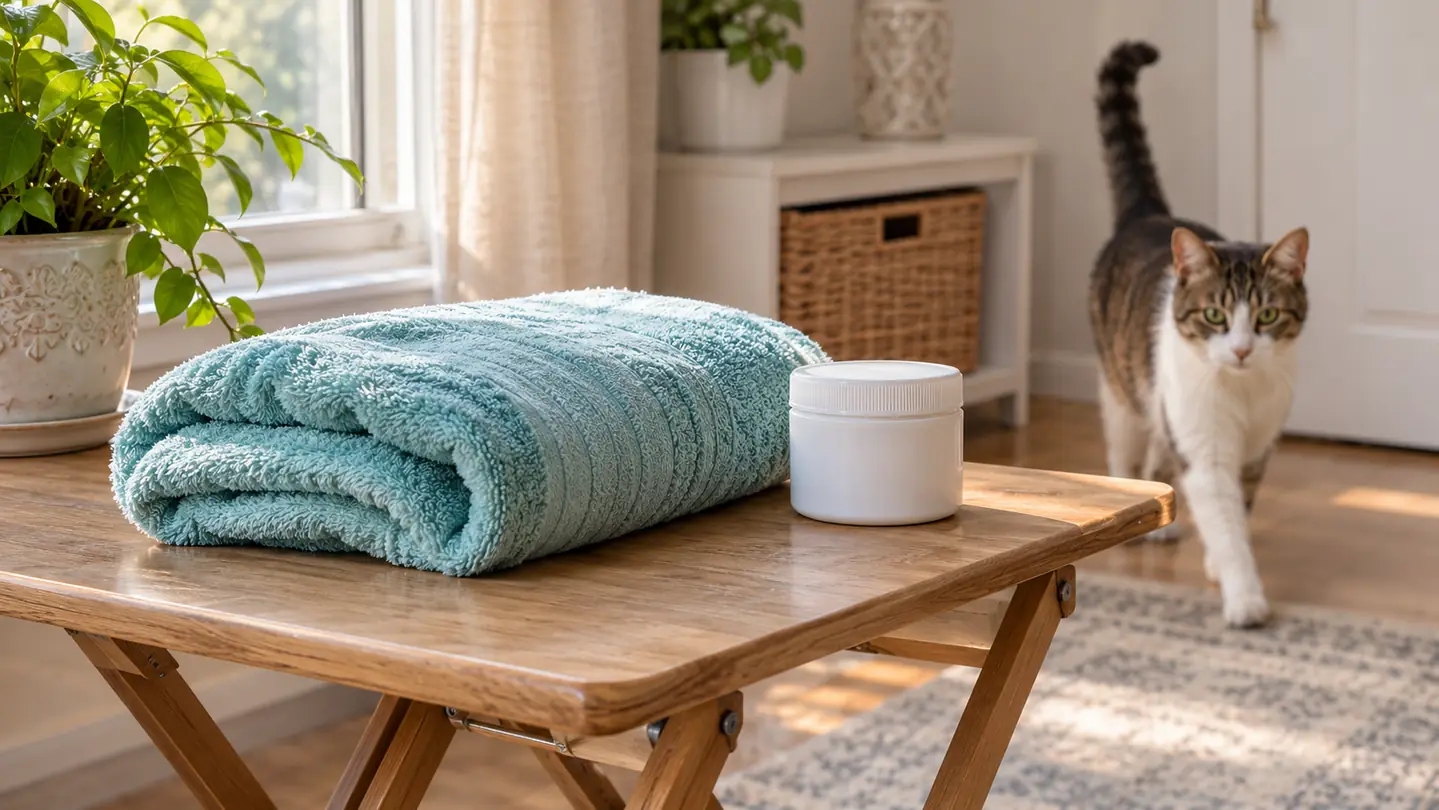
The tub is small, about three inches on a side and a little over ten ounces, so it sits on the edge of the table without taking up real estate. Close the lid one-handed between steps. The first few times I left it open and ended up with a wipe on the floor and a cat sitting on the lid.
One wipe per cat per session. They are not reusable, and there is no reason to be thrifty about it.
Step 3: Start at the Front Teeth and Let Him Investigate First
Not the back. Everybody wants to dive for the molars on day one, and that is how you get a cat who leaves the room when he hears the tub open. Start at the front: the small incisors and the long canines, the easiest teeth in the mouth to reach. Let him sniff the wipe first. Pip licks it. That is fine, because there is no rinse step and no paste to worry about.
Cup the chin lightly with the free hand, if your cat allows it. Mine does not. With Pip, cupping the chin is the line not to cross. Instead I approach from the side, lift the lip with my thumb, and slide the fingertip back along the cheek.
Front teeth only for the first week, if that is all you get. Juniper will let me do a full mouth. Pip and I are two months in and he still gets a front-only night about a third of the time.
Step 4: Work the Gumline, Not the Flat of the Tooth
This is the part that makes the difference. Plaque sits where the tooth meets the gum, and a wipe dragged across the chewing surface is mostly cosmetic. Angle the fingertip so the edge of the wipe rides along the gumline, then use short circles, three or four per tooth, working toward the back.
The cheek side is where you can actually do something. The inside surfaces against the tongue are much harder and I do not get them on Pip at all. My vet said that is normal for home care and not worth a battle.
Back molars last, once he is used to the routine. That is where my vet saw the tartar on Pip, so it is worth the patience. Top and bottom separately, one pass each side, and stop before he decides he has had enough.
If he turns his head, follow the head instead of fighting it. A wipe that stops when the cat stops teaches him that turning away ends the session, which is the opposite of what you want. Pull your hand out, wait two seconds, and go back in once.
Step 5: Stop Early, Pay Up, and Come Back in Two Days
Stop while it is still going fine. It is tempting to push for one more tooth, and that is exactly the impulse that ends the streak. Three teeth tonight is a good night. There is always Thursday.
Then pay. Pip gets a squeeze treat and Juniper gets a minute of chin scratching, because she does not care about food. The payment needs to land within a couple of seconds of finishing, or it gets attached to the wrong thing.
A few evenings a week is what has worked here. Every night is better in theory and also how you burn out by week two. Two months in, Pip's breath at the six a.m. headbutt is noticeably less alarming, and I get through his back molars most nights without a growl.
Plaque sits where the tooth meets the gum. A wipe dragged across the chewing surface is mostly cosmetic. The edge along the gumline is the whole job, and that is four seconds per tooth.
How Long Before You Notice a Difference
Breath changed first, at maybe three weeks, and only on the nights I had done the back molars. The gumline itself takes longer to look different and I am honestly not sure I could see the change without the vet pointing at it. What I can measure is tolerance. Pip went from two front teeth to a full front pass plus one molar before he pulled away.
Two months is a fair trial. A week tells you nothing except whether your cat will let a finger near his mouth, which is real information. If week one is a disaster, back up to letting him lick the wipe with no contact at all for a few days, then try a single tooth.
I keep a note on my phone with a simple tally for each cat, because otherwise the weeks blur and I convince myself I have been more consistent than I have. Seeing four marks in a week is a better motivator than a vague intention.
What Else Helps
The wipes are one piece of it, and the yearly exam is the other. My vet checks both cats' teeth at their annual visit and I do not skip it just because home care is going well. A wipe manages the surface. It cannot see what is happening under the gumline or between teeth.
Two smaller things that help. A second pair of hands once a week: my husband holds Juniper's back end while I do her molars, which gets three or four teeth done in one pass instead of a negotiation. And keep the tub where you actually sit. Mine lives in the top drawer of the craft table beside the nail clippers, so teeth happen in the same place the cats already expect to be handled.
Water and chew toys help a little, mostly by keeping saliva moving and doing some mechanical scraping, but they are not brushing. I would not count them as dental care on their own.
What the Wipe Won't Do
It will not take off tartar that has already set hard. Two months of Paw Science wipes have kept Pip's gumline cleaner and his breath better, but the vet still noted the same back molars at the last visit, and we are still on the yearly schedule. If your cat has visible brown buildup, red gums, or a change in how he eats, that is a vet conversation, not a wipe conversation.
It also will not work on a cat who is in pain. If he flinches when you touch one side of his mouth, stop and get it looked at. Same for drooling, or for dropping food he would normally eat.
And it will not turn a cat who hates being handled into one who does not. It reduces the handling to almost nothing, which is the most I can honestly claim. Juniper still wants her turn over with in a minute. Pip still leaves after his treat. Nobody in this house has learned to love dental care.
Start with the front teeth tonight
One wipe, one finger, a few seconds per tooth along the gumline. Paw Science dental finger wipes are no-rinse and unscented, and the tub is small enough to live in a drawer next to the nail clippers. The vet still does the yearly check. This is what happens in between.
Amazon Check Today's Price on Amazon →