Pip will not sit for a brush. He is four years old, nine pounds, a short-haired orange tabby with strong opinions, and the moment I lift the slicker off the craft table he remembers an urgent appointment on the other side of the house. For two years I groomed him in stolen increments, three strokes at a time, one hand steadying him and the other working fast, and still swept enough fur off the rug every week to knit a second cat. He was never scared of it. He was just done with it before it started.
Then I tried the HandsOn grooming gloves, less out of optimism than out of a tired kind of curiosity. I have been using one pair, size small, for about five weeks now, mostly on Pip, because he will not sit for a brush but will absolutely sit to be petted. That is the entire trick of these things, and it is not a small trick. They turn a grooming session into the thing your cat already wanted. My older cat, Juniper, gets a pass on her face and chest where the brush annoys her. That is the honest shape of my use, and it is what this review is built on. I have never used them in a bath, because neither of my cats gets bathed in gloves.
The Quick Verdict
The best low-conflict tool I have found for a cat who runs from brushes, and a poor replacement for a real brush on a coat that mats. Buy it for the cat that leaves, not the cat that sits.
Amazon Check Today's Price →The cat who runs from the brush will sit still for this
Rubber nodules on the palm and fingers lift the loose undercoat while you pet, so the session reads as affection instead of a fight. One pair, size small, machine washable, about three and a half ounces.
Amazon Check Today's Price on Amazon →How I've Used It
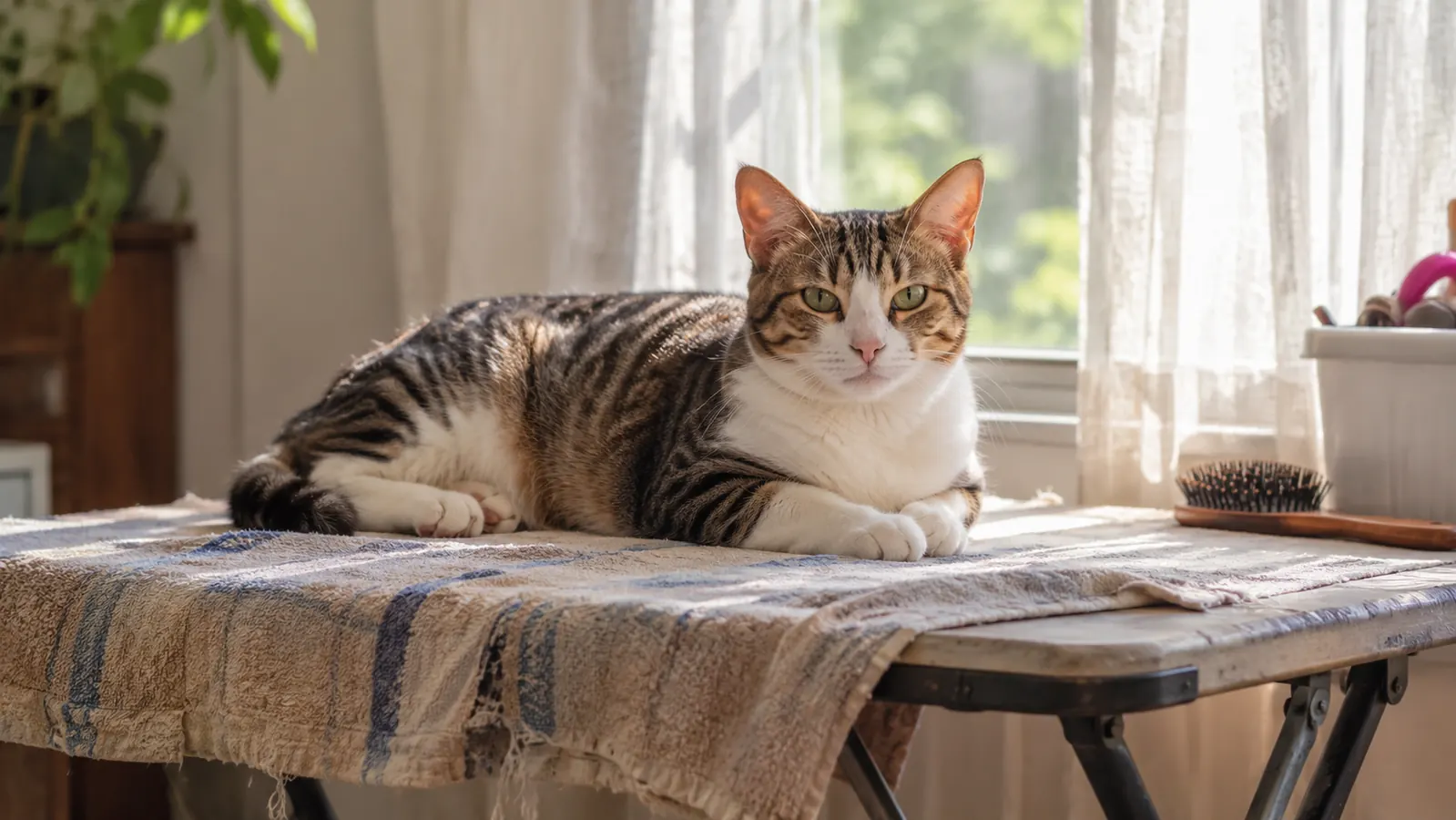
My grooming setup is a folding craft table in the spare room with a towel thrown over it, next to a window, because both cats settle faster in a spot that does not smell like anything in particular. Juniper gets brushed most evenings for a few minutes, back and sides and hindquarters. Nails for both cats every two to three weeks. That routine has been steady for a long while, and the HandsOn gloves slid into it rather than replacing any part of it. I did not buy them to change how I groom. I bought them because there was one cat and one twenty-minute window that nothing else was reaching.
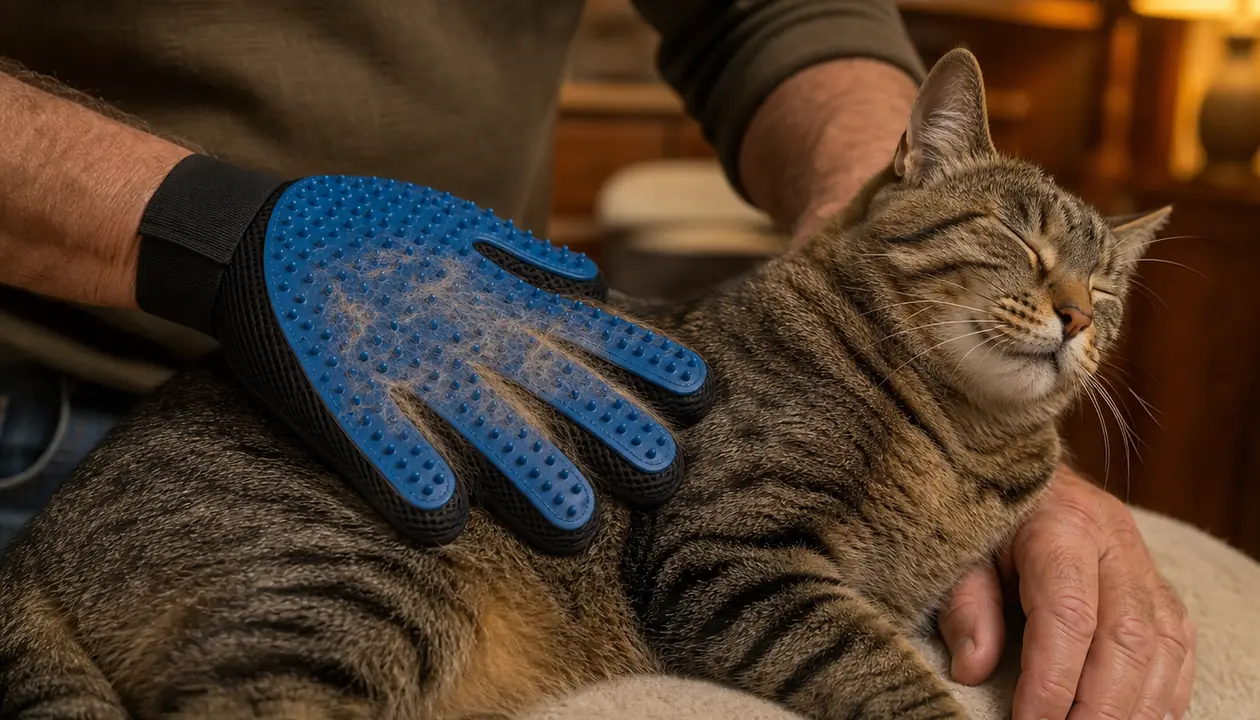
The gloves came out for Pip on the evenings he was already on my lap and I could feel the loose fur coming off on my palm. That is the moment they are built for. I keep them in the top drawer of the craft table with the slicker brush and the nail clippers, pull them on, and pet him the way I would have petted him anyway. Two or three minutes, then I peel the fur off into the bin and take them off and let him go. No towel, no holding, no third hand. The whole reason this worked is that Pip never registered it as grooming.
On Juniper I used them differently. She tolerates the slicker on her back and sides but gets twitchy around her face and chest, so I used a gloved hand there instead, short slow passes under her chin and down the front of her chest. She leaned into it and stayed for a couple of minutes. That is not a full groom and I am not going to pretend it is. It is a slice of her coat that was going unbrushed for months because every tool I owned made her flinch there, and now it gets a pass two or three times a week.
What the Gloves Actually Are
They are a pair of soft gloves with small rubber nodules covering the palm and the insides of the fingers. The pair is light, about three and a half ounces, and measures roughly thirteen inches from cuff to fingertip, so they fold flat and disappear into a drawer. You put them on the way you put on any glove and that is the entire setup. No assembly, nothing to charge, nothing to switch on, no learning curve past figuring out which hand goes where. I had them on and working the first evening they arrived.
The nodules are the working part. Dragged with the lie of the coat rather than against it, they catch hair that is already on its way out and hold it in little clumps until you peel it off. The listing also says the nodules stimulate circulation and help distribute the coat's natural oils, which is the kind of claim I file under plausible and unmeasurable. What I can tell you is that after a few minutes of petting, Pip's coat looked smoother along the back. That is either the oils or the fact that I had just pulled half a cat's worth of fluff off him, and I genuinely cannot tell you which.
The gloves are machine washable, which matters more than it sounds. You finish a session with a glove covered in fur and a fine haze of it worked into the nodules, and a rinse and air dry handles the everyday version. The wash handles the rest. Over five weeks and several washes they have held their shape, and the nodules have not started peeling or flattening, which was my main worry given how much they get dragged through a coat.
Five Weeks on the Cat Who Hates Being Brushed
Here is the thing about a cat who hates brushes: he does not hate being touched. Pip sleeps against my hip, follows me into the spare room, and will hold still for a solid ten minutes of scratching behind his ears. The brush is the problem, not the contact. The gloves take the brush out of the equation and leave the contact, and Pip has not walked away from a gloved hand the way he walks away from the slicker. Not once in five weeks. That is the entire case for them and it is a strong one.
The first session I got maybe four minutes before he had enough, and a palm-sized mat of orange fur off his back and flanks for it. By week three I was getting five or six minutes and a noticeably bigger handful. That is not because the gloves improved. It is because Pip stopped bracing. A cat that expects a brush braces for the pull and leaves early. A cat that expects a hand stays put and lets you keep going, and those extra two minutes are where the fur actually comes from.
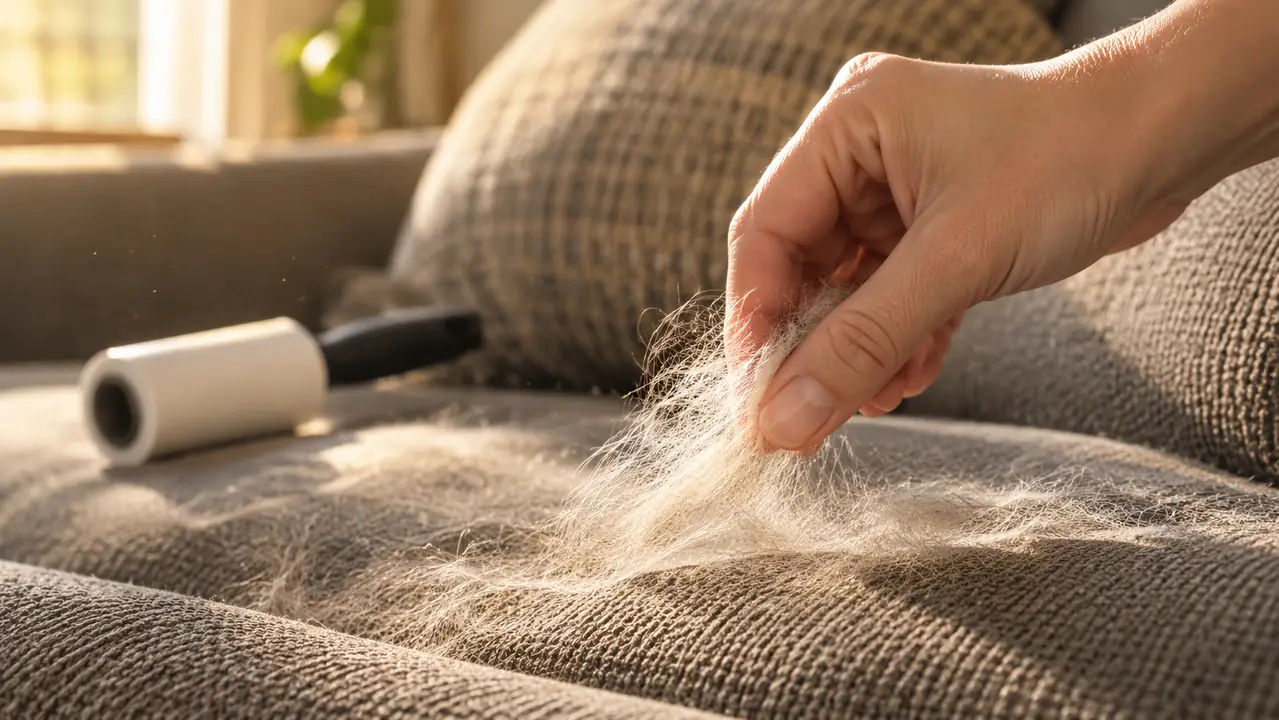
The fur comes off in clumps instead of a cloud, which is the part I did not expect to appreciate as much as I do. With the slicker, a good share of what I loosen floats and settles on the towel, the table, and eventually the floor. With the gloves it sticks to the nodules until I peel it off. Less sweeping. That sounds like a small thing until you have swept the same rug four days running and still found a fur tumbleweed under the sofa on the fifth.
A cat that expects a brush braces for the pull and leaves early. A cat that expects a hand stays put and lets you keep going.
The Long-Haired Test, and Where the Gloves Stop
Juniper is the harder case and I want to be straight about the limit. She is seven, about fourteen pounds, with a long coat that mats behind her ears and on the backs of her legs if I let it go. The gloves did not touch those mats. Nothing I own touches those mats except my fingers working them apart slowly and then a brush afterward. A rubber nodule drags across the surface of a mat. It does not get under it, and honestly it should not try, because pulling at a tight mat with a glove is how you teach a cat that the spare room is a bad place to be.
Where the gloves earned their place with Juniper was the parts she will not let a brush near. Under her chin, down the front of her chest, the flat of her cheek below the ear. One gloved hand, slow passes with the growth of the hair, and she stayed for it. It pulled a surprising amount of loose undercoat off her chest, which is a spot I had basically been ignoring for a year because the slicker made her flinch there and I had stopped pushing. That is a real gain, and it is a narrow one.
So the honest split is this. On a short coat with heavy shedding, the gloves can carry most of the job. On a long coat that mats, they are a supplement to a proper brush and a set of patient fingers, never a replacement. If you are shopping for something to handle a coat like Juniper's on its own, this is not it, and I would rather tell you now than have you find out behind her ears in March when the mat has tightened and the vet is involved.
Washing Them and Living With Them
Care is simple enough that I have no real complaint to file. I rinse them after each session, wring them out, and drape them over the edge of the sink to air dry. They go in the machine when they need it. They fold flat into the same drawer as the slicker and the clippers, take up less room than a hairbrush, and do not hold a smell as long as they get rinsed. For a tool that lives in a drawer and comes out on the cat's schedule rather than mine, that is what I want from it.
My one ongoing annoyance is that the fur does not always come off cleanly in one piece. Short sessions leave a fine haze worked into the nodules that takes a rinse to shift, and if you skip the rinse twice in a row you will notice it on your hand before the cat does. The other thing worth knowing is that you will get fur on your wrist and forearm past the cuff. That is not a design fault so much as the nature of dragging a hand through a shedding coat, and I keep a lint roller in the same drawer and use it on myself.
One note on fit. I have small hands and the size small pair sits close enough that I can feel what I am doing through it, which is the point of a thin glove. If you are between sizes and want dexterity around a cat's face and paws, I would not size up out of caution. A loose glove on a twitchy cat is worse than a snug one.
What I Liked
- Pip, who will not sit for a brush, sits for these without bracing or leaving
- Loose fur clumps on the nodules instead of drifting onto the floor and the rug
- Machine washable, light, and thin enough to fold flat into a drawer
- Gets the face and chest where a slicker makes Juniper flinch
Where It Falls Short
- Does nothing to a mat on a long coat, not even a loose one
- Fine fur works into the nodules and needs a rinse after most sessions
- You will end up with fur on your wrist past the cuff
- Not a bath tool for me, since neither cat gets bathed in them
Who This Is For
This is for the person with a cat that leaves. The one who bolts at the sight of a brush, tolerates exactly three strokes, and then remembers something urgent in the other room. If your cat already sits for a slicker and you are getting the fur off, you do not need these and they will not do the job better than what you have. But if your cat fights every tool you own and still climbs into your lap every evening, the HandsOn gloves fit the gap between those two facts, and that gap is where most of the shedding in my house was hiding for two years.
Who Should Skip It
Skip it if your main problem is mats on a long coat. The gloves will not get under them, and a mat that has already tightened needs fingers and a proper brush, or a groomer. Skip it if you want a bath tool, because a rubber-nodule glove is only as good as the cat's willingness to be in water, and mine have none. And skip it if you are after one tool that replaces the brush, the clippers, and the wipes, because it replaces none of those. What it does is fill the twenty minutes a week when your cat wants to be petted and you want the fur off him anyway.
For the cat that leaves when the brush comes out
One pair, size small, machine washable, about three and a half ounces, folds flat in a drawer. Five weeks in and it is the only grooming tool Pip has never walked away from.
Amazon Check Today's Price on Amazon →