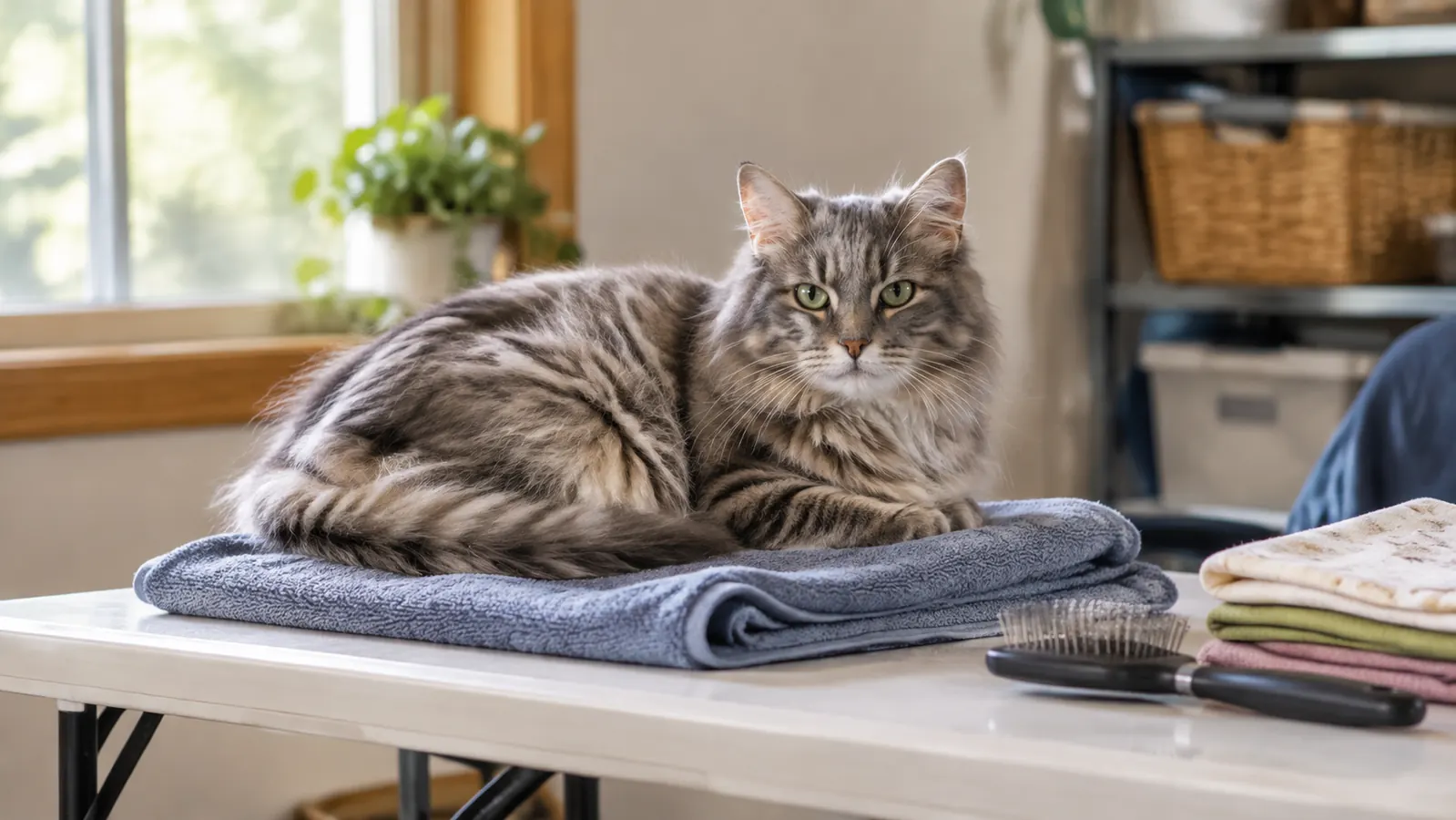
The first time I noticed, I was sitting on the floor of the spare room with Juniper half in my lap, and I caught a whiff of something that was not the candle I had lit two hours earlier. My 7-year-old Maine Coon mix is 14 pounds of smoky gray fur and she does not do baths. The last time I tried, I ended up with a wet shirt and a cat who stayed under the bed until dinner. So I did what I do with every grooming problem that turns up in this house. I went looking for something smaller than a bath.
That search is how a pack of Burt's Bees for Pets Cat Wipes ended up in the top drawer of my folding craft table about three months ago. I have used them a few times a week since, on Juniper's hindquarters and paws, and on both cats when my sister comes over. My sister is mildly allergic and the cats are not going anywhere. The wipes have replaced most of the baths in this house, though not all of them, and not for every job. Here is what three months of steady use actually looks like.
The Quick Verdict
A short, unscented wipe that handles hindquarters, paws and the coat pass before a guest arrives. It will not touch a mat and it will not replace a real bath.
Amazon Check Today's Price →The 90-Second Pass That Replaced Most of My Baths
Fifty unscented wipes, 6.8 by 7 inches each, built for the back-of-ears-to-tail direction. At a few uses a week, one pack lasts me three to four weeks.
Amazon Check Today's Price on Amazon →How I've Used It
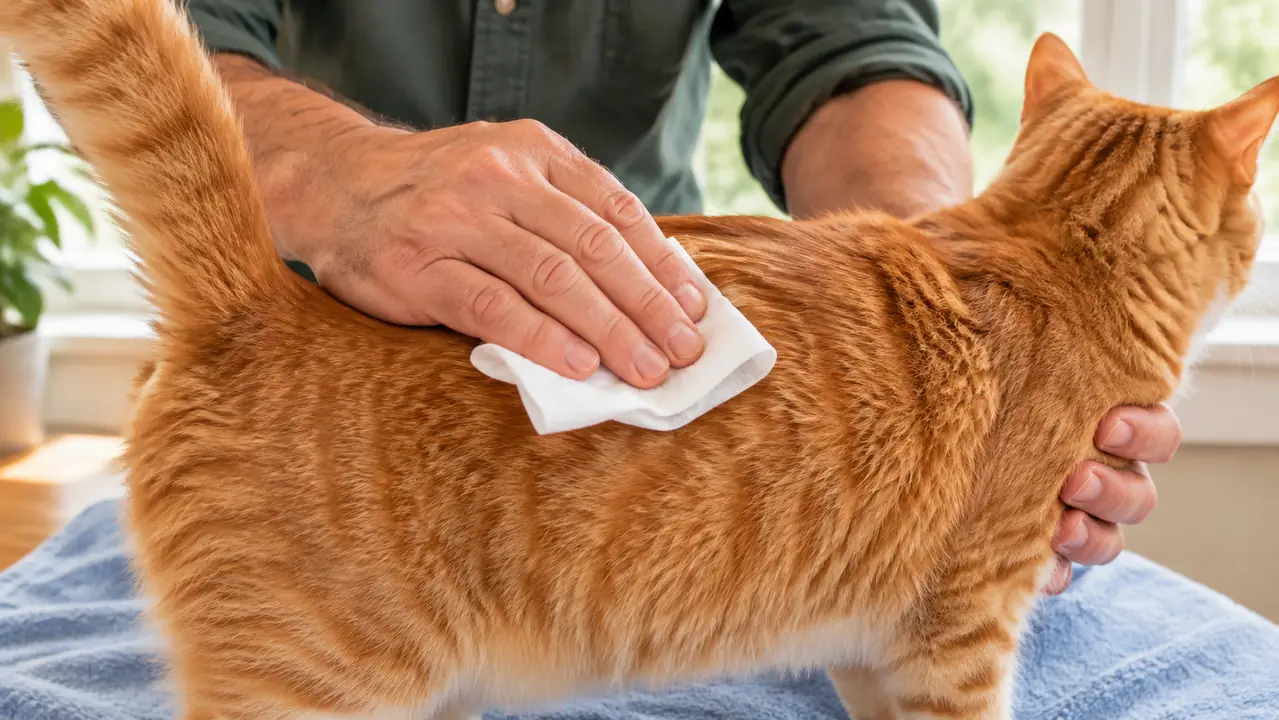
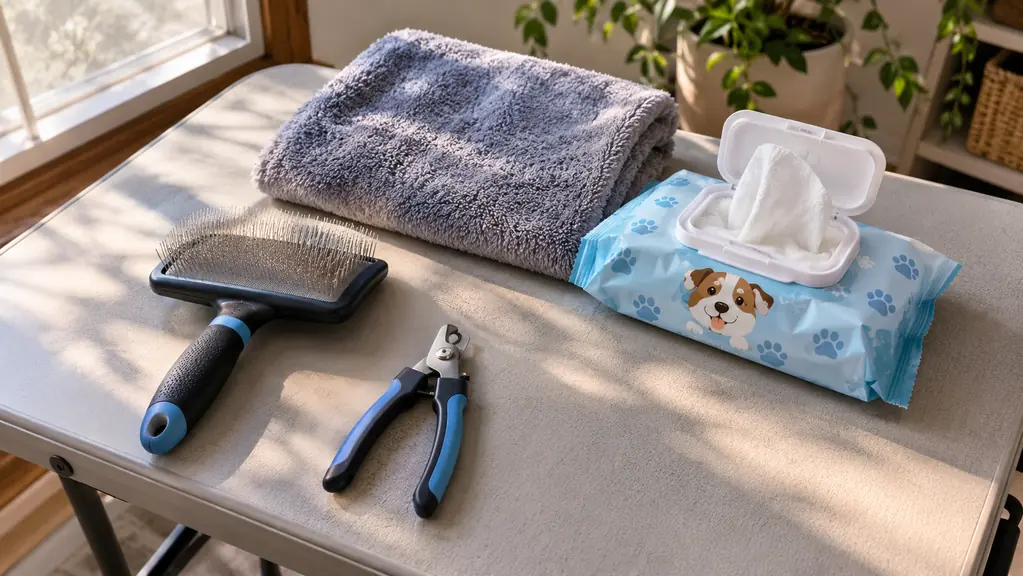
The routine is small enough to actually keep. The pack lives in the top drawer of the folding table in the spare room, next to the slicker brush and the nail clippers. I put Juniper on the towel, take out one wipe, and work from the back of her ears toward her tail the way the package says, staying away from her eyes entirely. One wipe does her hindquarters and both back paws. If her chest fur feels gritty I use a second one there, and that is the whole session.
Juniper is the easy one. She will tolerate almost anything for about ninety seconds if there is a window to stare out of. Pip, my 4-year-old orange tabby, is a different project. He is nine pounds of opinions and he fights nail trims like it is a paid position. He has no interest in being wiped down all over, so with him I do one small area, pause, then another. He gets the full pass only when my sister is coming, and even then I split it into two sittings, one in the morning and one an hour before she arrives.
A typical Tuesday looks like this. I get home around six, feed both cats, and let the kitchen settle for twenty minutes before I go near anybody with a wipe. Juniper gets her brushing first, five minutes on the back and hindquarters. Then one wipe, hindquarters and both back paws, and she is down off the table. Pip gets his pass on the couch instead of the table, because he associates the table with nail clippers and will not stay put on it. Morning and evening split, and if I only get one area done, that is the area that gets done.
A pack has lasted me three to four weeks at that pace. Over three months the wipes have replaced most of the baths in this house. Not all of them. Juniper still gets a real bath about once a season and Pip gets one when he sits in something he should not have. But the number of times I have filled a sink for a cat dropped from roughly once a month to almost never, and my lower back has opinions about how much it appreciates that.
What's Actually on the Wipe
I spent years behind a cosmetics counter, so I read an ingredient panel the way some people read a box score. The liquid in these is short. Colloidal oat flour is the one I pay attention to, because I sold a lot of oat-based lotions to customers with reactive skin and I know what it is doing there. Honey is in the formula to condition the coat. The label states no fragrances, no sulfates, no colorants and no harsh chemicals, and my nose agrees with the fragrance part. There is no perfumey smell at all. That matters, because a scented wipe on a cat means a cat making a face and walking away for an hour.
The size is built for a cat. Each wipe measures 6.8 by 7 inches, which is enough cloth to do one hindquarter and one paw without folding it down to a scrap. I have used a smaller wipe before and spent more time repositioning it than wiping. The 50-count pack suits the way I groom, which is a few times a week rather than every day. I press the pack closed flat every time I take one out, and it has stayed damp right down to the last few.
The pack itself is small enough to store standing up. It measures 9 by 3.5 by 1.38 inches and weighs 6.72 ounces, so it fits in the drawer with room left over and does not tip when I pull that drawer open too fast. I have had packs of wipes go dry because the seal was flimsy and the whole thing sat open on a shelf for a month. This one has held up, partly because the lid reseals flat and partly because I actually bother to press it. That is a small habit that turns into a large one around week three, when a dry wipe is a wasted wipe.
One instruction on the package is worth repeating because it is the one I would have gotten wrong on my own: wipe from the back of the ears to the tail and avoid the eyes. I follow it. I skip the face entirely with these and use a grooming glove for a pass on Juniper's cheeks and chest instead, because a flat cloth near her eyes gets her head turning and then I have wasted the wipe.
Where They Earn Their Place
Hindquarters first, always. That is where Juniper's coat goes dense and where the smell starts if I let it slide for a week. Two passes with a Burt's Bees wipe and her back end smells like nothing again, which is the highest compliment I can pay a grooming product. It does not leave a scent behind. It just removes what was there.
There was one Saturday in particular. Juniper had been out on the screened porch most of the afternoon and came in with something on her back leg that I still cannot identify, a dark smudge with a smell attached to it. I did not want to put her in a sink over it. Two wipes, one on the leg and one around the base of the tail, and it was gone. No bath, no wet shirt, no cat under the bed for two hours. I have thought about that afternoon more than once since, because it is exactly the kind of small mess that used to turn into an entire evening.
Paws second. Paw pads pick up litter dust and whatever was on the floor of the garage, and a quick wipe across the pads and between the toes takes about ten seconds a foot. It has saved me a lot of towel laundry by the back door. Juniper does not enjoy it. She pulls her foot back, I let her, then I take it again. It is a negotiation, not a fight, and it goes faster when I do it after a brushing session rather than before one.
Coat last. When my sister comes over I do a full pass on both cats, and the difference is not dramatic in a photograph. It is a texture thing. Juniper's fur goes from slightly tacky to smooth and the loose hair stops flying when she jumps off the table. That is what a wipe actually does well. It resets the surface without soaking down to the skin, which is the part a bath does too much of.
Three months in, I have also learned the order. Wipes work on a coat that has already been brushed. If I wipe Juniper first and brush second, the wipe drags, the fur clumps, and I find a matted patch behind her ear by the weekend. Brush, then wipe. That sequence matters more than which brand is on the pack, and it took me two weeks to stop doing it backwards.
The Allergy Test
My sister is mildly allergic to cats. She takes an antihistamine before she drives over no matter what I do, and I am not going to sit here and tell you a pack of wipes solved that. What I can tell you is what changed in this house. The wipes lift loose hair and surface dander off the coat, so when she sits on the couch for two hours she is not getting a face full of it. She has not had a bad visit since I started. Before, she used to leave after an hour with red eyes and a tissue in each hand.
Here is the honest version of the routine, in order. Two days out I wash the throw blanket she always ends up under. The day of, I vacuum the couch cushions and the rug, then run a Burt's Bees wipe over both cats about an hour before she is due so the coat has time to settle. Juniper gets the full pass. Pip gets two shorter ones. I leave the pack out on the counter while she is here in case one of them rolls on the floor, and I have used it mid-visit exactly once. That is the whole system, it takes about forty minutes of my afternoon, and it has changed how long she stays.
What wipes do not do is clean the air. Before she visits I vacuum the couch and the rug, wash the throw blanket she always uses, and run a wipe over both cats about an hour before she is due. The wipes are one step in a routine, not a substitute for the vacuum. Anybody who tells you a wipe makes a cat allergy-free is selling you something, and I say that as a person who likes the product.
What Wipes Cannot Fix
They will not get out a mat. Juniper gets them behind her ears and on her back legs, and a wet cloth laid on a mat pulls it tighter. I work those loose with my fingers first, a few strands at a time, then go in with the slicker brush, then wipe the area afterward to pick up the loose fur. That is five minutes instead of two, and in shedding season it has to happen a couple of times a week.
They will not take grease out of a coat, and they will not stand in for a bath on a cat who is genuinely dirty. If your cat is chewing at a spot or losing fur in patches, that is a vet appointment and not a grooming wipe. Neither of my cats has needed one for skin, but I have been the person who tried a product for a week before making the call, and I would like those weeks back.
And they will not turn a cat who hates being handled into a cat who tolerates it. Pip still walks away halfway through. The difference is that halfway through is now enough to finish the job, which a bath never was.
What I Liked
- No fragrance at all, which is rare in this category and easy on a cat's nose
- 6.8 by 7 inch wipe is big enough for a hindquarter and a paw without folding it into a scrap
- Colloidal oat flour and honey in the formula, with no sulfates, colorants or harsh chemicals listed
- Replaced most baths here, from roughly once a month to almost never
- A 50-count pack lasts three to four weeks at a few uses a week
- Fast enough for a cat with a ninety-second tolerance
Where It Falls Short
- Does nothing for a mat, and a wet wipe can make one tighter
- Will not degrease a dirty coat or replace a real bath
- Pip still walks off mid-session, so a full pass takes two sittings
- The face is off limits, so I still need a glove for cheeks and chest
- The pack goes stiff if you do not press it closed flat every time
The number of times I have filled a sink for a cat dropped from roughly once a month to almost never, and my lower back has noticed.
Who This Is For
This is for the person whose cat does not do baths and never will. If you have a long-haired cat with a dense back end, a short-haired cat who tracks litter dust across the house, or a guest with a mild allergy who visits often enough that you want to do something about the couch, a pack of Burt's Bees for Pets Cat Wipes earns its drawer space. It suits a grooming routine that already exists. If you brush a few evenings a week and trim nails every two to three weeks, adding a wipe pass takes under two minutes and fits into what you are already doing.
It also suits cats who tolerate handling in short bursts. Ninety seconds of cooperation is plenty. If your cat gives you thirty seconds, you can still do one hindquarter and call it a day, and come back tomorrow. The wipes are forgiving that way. They do not need a full session to be worth pulling out.
Who Should Skip It
Skip these if your cat is heavily matted. A wipe is the wrong tool for a mat and using one can make the problem worse before it gets better. Work with a brush and your fingers, or book a groomer, and keep the wipes for maintenance afterward. Skip them too if you want a product that cleans and conditions in one step for a cat who genuinely needs washing. This is a spot cleaner, and the word spot is doing real work in that sentence. And if your cat has an active skin issue, the wipes are not the answer. Your vet is.
Start With One Pack and One Hindquarter
Brush first, wipe second, back of the ears to the tail, eyes left alone. Fifty unscented wipes at 6.8 by 7 inches, and a pack that runs me three to four weeks.
Amazon See the Current Price on Amazon →